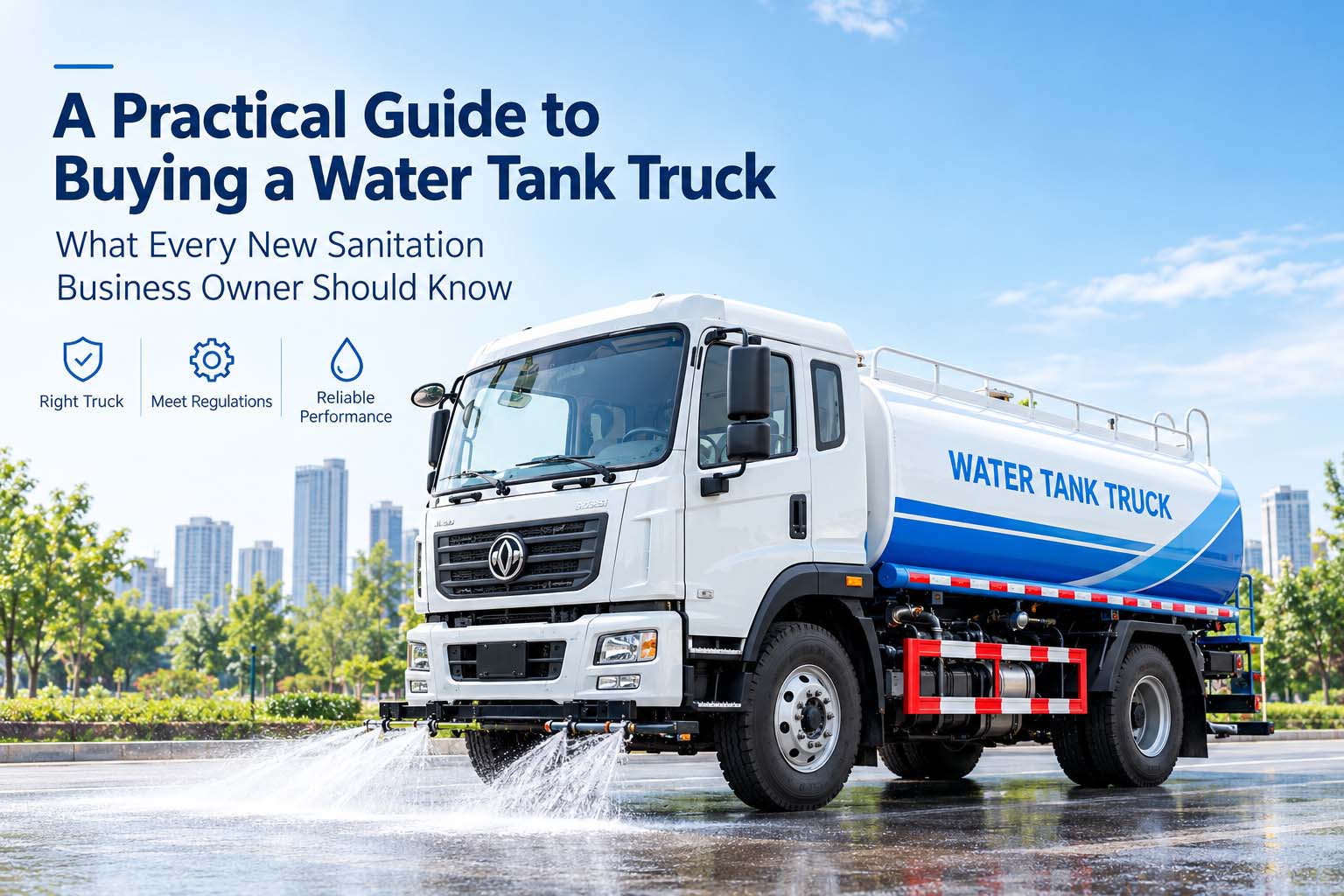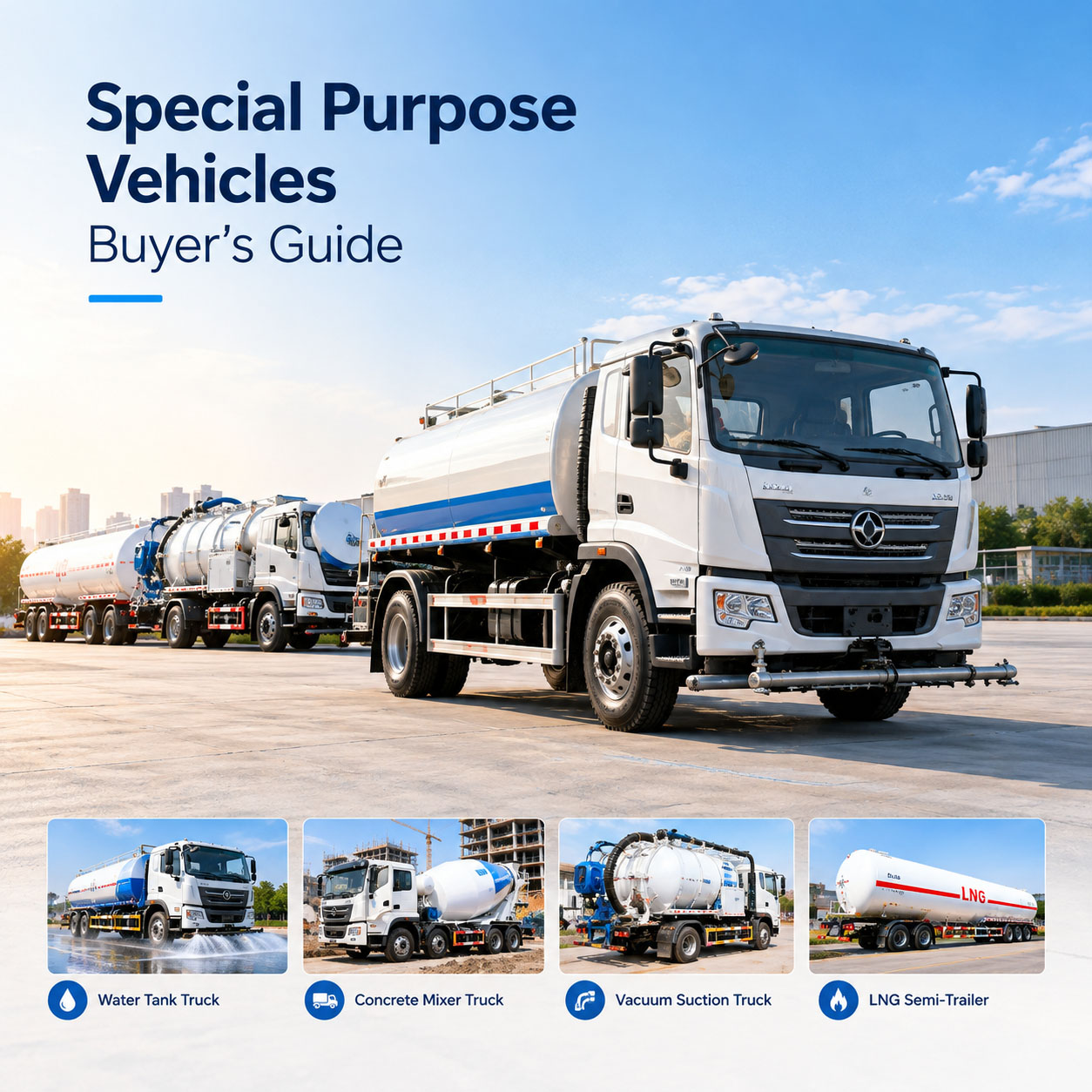
Buying a special purpose vehicle is a significant investment. Whether you need a water tank truck for municipal services, a concrete mixer truck for construction projects, a vacuum suction truck for waste collection, or an LNG semi-trailer for gas transportation, the vehicle must match your operational needs, budget, and local regulations.
Unlike standard commercial trucks, special purpose vehicles often involve application-specific equipment, customized configurations, and additional technical requirements. A mistake made during procurement can lead to more than unexpected expenses. It may also cause registration delays, frequent maintenance problems, or costly downtime once the vehicle is in service.
So, what should buyers pay attention to before placing an order?
Here are five common mistakes to avoid when purchasing special purpose vehicles, along with practical steps to help you make a more informed decision.

1. Choosing a Vehicle Before Defining Your Requirements
One of the most common purchasing mistakes is starting with the vehicle model or price before understanding the job the vehicle needs to do.
A water tank truck used for road cleaning has different requirements from one used for dust suppression. Similarly, a vacuum suction truck designed for municipal sewage collection may need a different configuration from one used in an industrial environment.
Choosing a vehicle without clearly defining its intended application can result in insufficient performance, unnecessary features, or equipment that is unsuitable for the working conditions.
How to avoid this mistake
Start by preparing a clear list of your operational requirements.
- Define the application. Identify the main tasks the vehicle will perform and whether it will be used for one purpose or several.
- Consider the working environment. Take into account road conditions, terrain, operating temperatures, working hours, and access restrictions.
- Identify cargo requirements. For liquid or gas transportation, consider the material being carried, its properties, required capacity, and applicable safety requirements.
- Confirm the technical configuration. Discuss engine performance, chassis specifications, tank or body materials, hydraulic systems, pumps, and optional equipment with the manufacturer.
You do not need to know every technical detail before contacting a supplier. However, providing a clear description of your working conditions will help the manufacturer recommend a more suitable configuration.
The goal is not to buy the most powerful or heavily equipped vehicle. It is to choose one that can perform the required work reliably without unnecessary cost.
2. Focusing on Price Without Verifying the Manufacturer
A competitive quotation can be attractive, particularly when purchasing several vehicles for a fleet. However, a low price does not necessarily mean better value.
Special purpose vehicles combine a chassis with application-specific equipment. The quality of the completed vehicle depends on factors such as component selection, fabrication standards, assembly quality, testing procedures, and the manufacturer’s ability to integrate different systems correctly.
If these areas are overlooked, buyers may face recurring faults, premature wear, or difficulties obtaining technical support after delivery.
How to avoid this mistake
Before choosing a supplier, look beyond the quotation and evaluate the manufacturer’s actual capabilities.
- Check manufacturing experience. Ask about experience with the specific vehicle type and application you need.
- Verify relevant qualifications. Request applicable manufacturing licenses, vehicle approval documents, and product certifications where required by the destination market.
- Review quality records. Ask what inspections and tests are carried out during production and before delivery.
- Request supporting evidence. Product specifications, inspection reports, factory photographs, and videos can help you assess the vehicle and manufacturing process.
- Clarify the supplier’s role. Determine whether you are dealing directly with the manufacturer, a vehicle body builder, or a trading company, and confirm who is responsible for technical issues and warranty claims.
Certifications and quality documents should always be checked for authenticity, scope, and relevance to the vehicle being purchased. For example, a company’s quality management certification does not automatically mean that every vehicle configuration is approved for road use in your country.
A reliable supplier should be able to explain what is included in the quotation, how the vehicle is manufactured, and which documents can be provided for your order.
3. Overlooking After-Sales Support and Spare Parts
A vehicle’s purchase price is only one part of its overall cost. What happens after delivery can have an equally significant impact on your operation.
Special purpose vehicles often rely on equipment that requires specific maintenance, including hydraulic pumps, vacuum systems, specialized valves, control units, and other application-specific components.
If a critical part fails and a replacement is difficult to obtain, the vehicle may remain out of service while your business continues to incur labor, transportation, or project costs.
This is especially important for overseas buyers, who may not have convenient access to the original manufacturer.
How to avoid this mistake
Discuss after-sales arrangements before signing the purchase contract.
- Confirm warranty coverage. Ask which components are covered, how long the warranty lasts, and what exclusions apply.
- Check spare parts availability. Identify commonly replaced components and ask about ordering procedures and estimated supply times.
- Understand technical support options. Confirm whether support is available remotely and whether service partners are available in your region.
- Clarify maintenance requirements. Request operation manuals, maintenance schedules, parts lists, and relevant technical documentation.
- Put commitments in writing. Make sure warranty conditions, service responsibilities, and spare parts arrangements are clearly documented.
For international purchases, it is also worth asking how technical problems will be handled across different time zones and whether the supplier can help identify replacement parts from photographs, part numbers, or technical drawings.
Good after-sales support does not eliminate every maintenance issue, but it can make problems easier to diagnose and resolve.
4. Checking Local Regulations Too Late
A vehicle that meets the requirements of its manufacturing country may not automatically qualify for registration or operation in your destination market.
Depending on the vehicle type and application, requirements may cover emissions, vehicle dimensions, axle loads, roadworthiness, lighting, braking systems, tank construction, or specialized equipment.
Vehicles designed for transporting hazardous materials or operating with pressurized systems may also be subject to additional technical and safety requirements.
Discovering these requirements after production can lead to expensive modifications, delayed delivery, registration problems, or even an inability to use the vehicle as intended.
How to avoid this mistake
Make regulatory checks part of the initial procurement process rather than leaving them until the vehicle is ready for shipment.
- Confirm the destination market. Tell the supplier the country where the vehicle will be imported, registered, and operated.
- Check vehicle approval requirements. Determine which homologation, type-approval, inspection, or registration documents are required.
- Verify emissions and weight limits. Confirm the applicable emissions standard, gross vehicle weight, axle-load limits, and other road-use restrictions.
- Check application-specific rules. For pressure vessels, gas transportation, hazardous materials, or other regulated applications, identify the relevant standards and approval procedures.
- Confirm the required paperwork. Agree on the export, technical, inspection, and conformity documents that must accompany the shipment.
Do not assume that a vehicle advertised as export-ready will automatically satisfy every local requirement. The applicable rules depend on the destination country, vehicle category, intended use, and configuration.
When necessary, consult the relevant transport authority, customs professional, or qualified local compliance specialist before finalizing the order.
A few checks at the beginning can help prevent much larger problems later.
5. Comparing Purchase Prices Instead of Total Costs
When comparing quotations, it is tempting to focus on the lowest price. However, two apparently similar vehicles may have different specifications, included accessories, shipping arrangements, and warranty coverage.
The initial purchase price also does not reflect every expense involved in putting the vehicle into service.
For imported special purpose vehicles, additional costs may include international freight, insurance, customs duties, taxes, port handling, inland transportation, registration, and any modifications required for local compliance.
Operating costs matter too. Fuel consumption, routine maintenance, replacement parts, and vehicle downtime can all affect the long-term economics of the purchase.

How to avoid this mistake
Compare quotations on a like-for-like basis and calculate the total cost of ownership.
Your cost comparison should cover:
- Vehicle price: The chassis, specialized body, standard equipment, and agreed configuration.
- Optional equipment: Additional pumps, control systems, accessories, or customization.
- Shipping and import expenses: Freight, insurance, customs duties, taxes, port charges, and local delivery, as applicable.
- Compliance and registration: Required inspections, certifications, testing, and modifications.
- Operating expenses: Fuel, servicing, consumables, and replacement parts.
- After-sales costs: Warranty exclusions, technical support, and maintenance arrangements.
If the supplier quotes FOB or CIF pricing, make sure you understand exactly which costs are included and which remain your responsibility. These Incoterms allocate specific costs and responsibilities, but they do not automatically cover every import-related expense.
It is also helpful to request a detailed quotation showing the vehicle specifications, included accessories, delivery terms, and payment schedule.
The cheapest vehicle is not always the least expensive to own. A well-matched configuration with clear documentation and practical support may offer better value over its working life.
Final Checklist Before Ordering a Special Purpose Vehicle
Before committing to a purchase, take a moment to review these key questions:
- Does the proposed vehicle match the actual working conditions?
- Have the chassis, specialized equipment, and technical specifications been confirmed?
- Have the manufacturer’s relevant qualifications and product documents been checked?
- Are warranty coverage, spare parts, and technical support clearly defined?
- Have local registration, emissions, weight, and application-specific requirements been verified?
- Does the quotation clearly explain the vehicle configuration, shipping terms, and additional costs?
If any important question remains unanswered, resolve it before production or shipment whenever possible.
For customized vehicles, written confirmation is particularly valuable. Keep an agreed specification sheet as part of the purchase documentation so that both parties have a clear reference for the final delivery.
Final Thoughts
Purchasing a special purpose vehicle involves more than choosing a model and negotiating a price. The right decision requires a clear understanding of the job, confidence in the manufacturer, realistic cost planning, and early attention to regulatory requirements.
By avoiding these five common mistakes, buyers can reduce procurement risks and make better-informed decisions about the vehicles their operations depend on.
Whether you are sourcing water tank trucks, concrete mixer trucks, vacuum suction trucks, or specialized transport vehicles, start with your actual requirements and evaluate each quotation against the same technical and commercial criteria.
Looking for a special purpose vehicle for your next project?
Share your intended application, destination country, and key technical requirements with our team. We can help you review suitable vehicle configurations and discuss the specifications, documentation, and purchasing considerations relevant to your project.