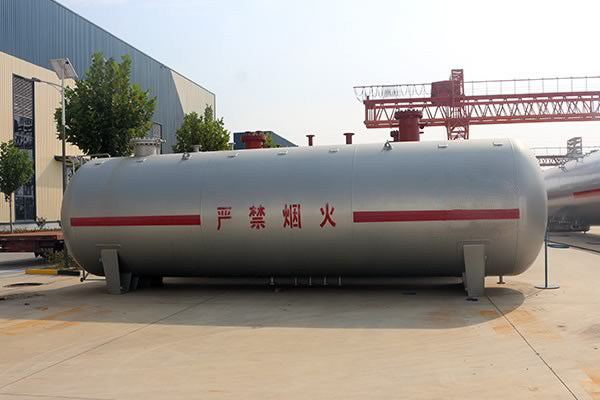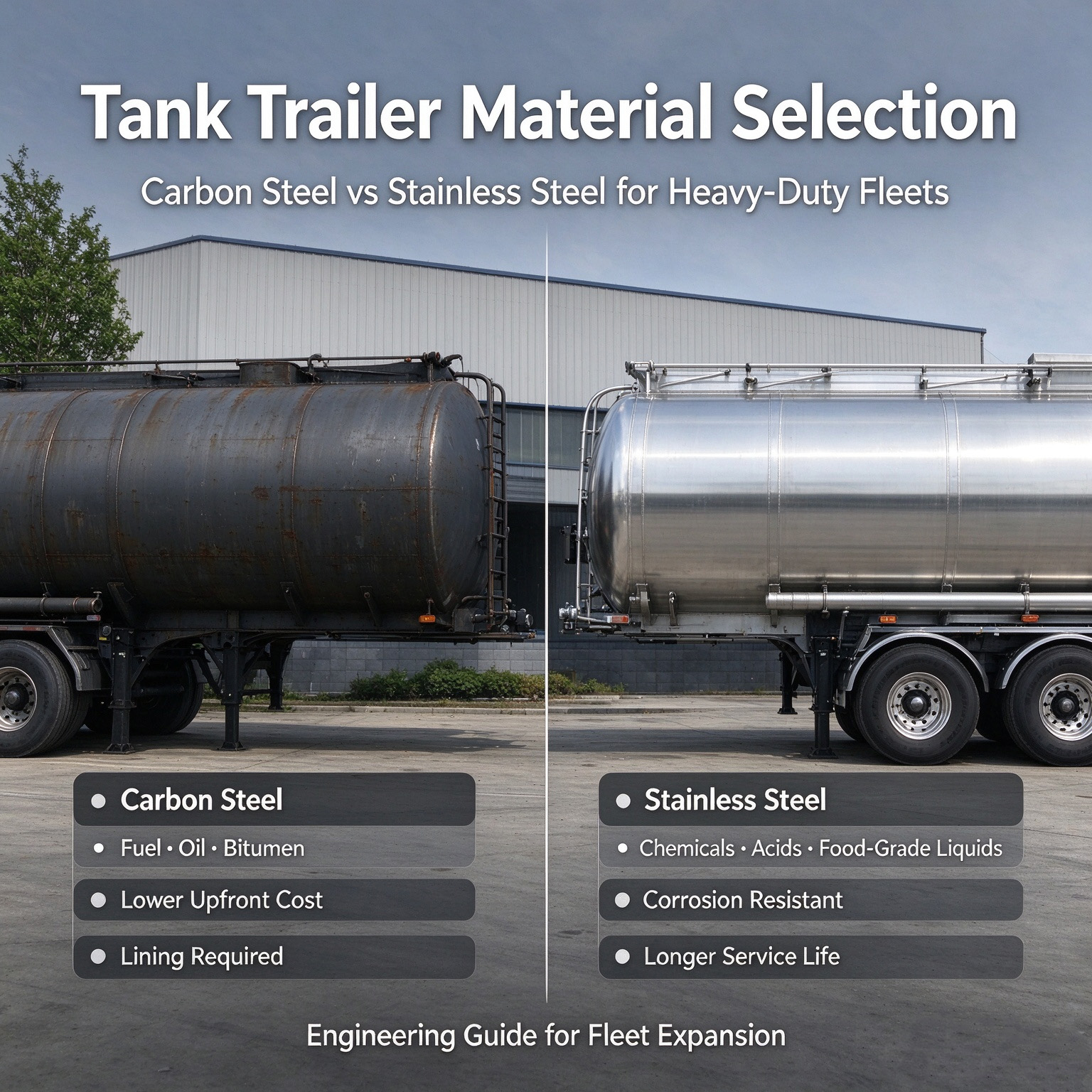
When expanding or upgrading a heavy-duty transport fleet, choosing the right material for your tank trailers is one of the most critical capital expenditure decisions. For international logistics companies and chemical distributors expanding their fleet with specialized Tank Semitrailers, the debate between Carbon Steel and Stainless Steel directly impacts operating efficiency, safety compliance, and long-term return on investment.

This comprehensive guide breaks down the core engineering differences, ideal cargo applications, and economic trade-offs to help you determine which material best suits your fleet’s operational profile.
1. Material Properties & Manufacturing Differences
Understanding the metallurgical foundation of each material explains how they perform under harsh industrial conditions.
- Carbon Steel (Q345R / Q235B or equivalent international grades):
- Composition: Primarily iron and carbon, offering high tensile strength and structural rigidity.
- Lining Requirement: Because carbon steel reacts with corrosive substances, it typically requires internal epoxy linings, rubber linings, or polyurethane coatings when hauling reactive liquids.
- Weldability & Repair: Highly ductile and straightforward to repair in field workshops worldwide using standard welding equipment.
- Stainless Steel (304, 316L, or 321):
- Composition: Alloyed with chromium and nickel (and molybdenum in 316L), forming a passive, self-healing chromium oxide layer that resists corrosion naturally.
- Surface Finish: Can achieve a highly polished internal finish (Ra $< 0.4 \mu m$), preventing chemical residue buildup and making it ideal for food-grade, pharmaceutical, and hazardous chemical transport. Explore our range of Stainless Steel Chemical Tankers engineered for severe corrosive environments.
- Corrosion Resistance: Inherently resistant to a wide spectrum of acids, solvents, and corrosive chemicals without requiring an internal liner.

2. Cargo Compatibility & Operational Scope
The type of freight your fleet moves is the ultimate deciding factor in material selection.
| Factor | Carbon Steel Tank Trailers | Stainless Steel Tank Trailers |
| Primary Cargo | Petroleum, diesel, crude oil, bitumen (asphalt), Dry Bulk Powder Tank Trailers, non-hazardous lubricants. | Corrosive acids (sulfuric, hydrochloric), liquid chemicals, alcohols, food-grade syrups, edible oils, pharmaceuticals. |
| Internal Protection | Requires specialized chemical-resistant coatings (regular inspection needed to prevent peeling). | Bare metal; no coating required for most chemical and food-grade applications. |
| Contamination Risk | Medium (coatings can degrade over time, risking product contamination in sensitive loads). | Low (inert surface prevents chemical leaching and flavor/color contamination). |

3. Cost, Weight, and Lifespan Analysis
Fleet managers must balance initial capital expenditure (CapEx) against ongoing operational expenditure (OpEx).
- Initial Investment (CapEx):
- Carbon Steel trailers are significantly more cost-effective upfront, making them the preferred choice for petroleum and fuel distribution where budgets dictate rapid fleet scaling.
- Stainless Steel units command a higher initial price tag due to the cost of raw alloy materials and specialized precision welding techniques (such as TIG/MIG inert gas shielding).
- Tare Weight & Payload Capacity:
- Stainless steel offers a higher strength-to-weight ratio in certain structural configurations, allowing for thinner walls while maintaining structural integrity. However, carbon steel tanks can sometimes be heavier depending on the required wall thickness for pressure containment. Lighter tare weight translates directly to higher legal payload capacities per trip.
- Lifecycle & Resale Value:
- While carbon steel has a shorter active service life in corrosive environments (typically 8–12 years depending on lining maintenance), stainless steel trailers routinely exceed 15–20 years of heavy operational use and retain a much higher secondary resale value.
Summary Checklist: Which Should You Choose?
- Choose Carbon Steel if: Your fleet focuses primarily on fuel, oil, bitumen, or dry bulk powder transport, and your operation requires an optimized initial investment with straightforward regional maintenance.
- Choose Stainless Steel if: You transport aggressive chemicals, hazardous acids, or food-grade liquids where contamination prevention, regulatory compliance (such as ADR/DOT standards for chemical transport), and long-term durability outweigh initial equipment costs.
Need customized tank specifications, ASME code stamping, or an engineered quote for your specific transport route? Contact our engineering team today or request a Custom Tank Specification Quote to discuss your fleet requirements.