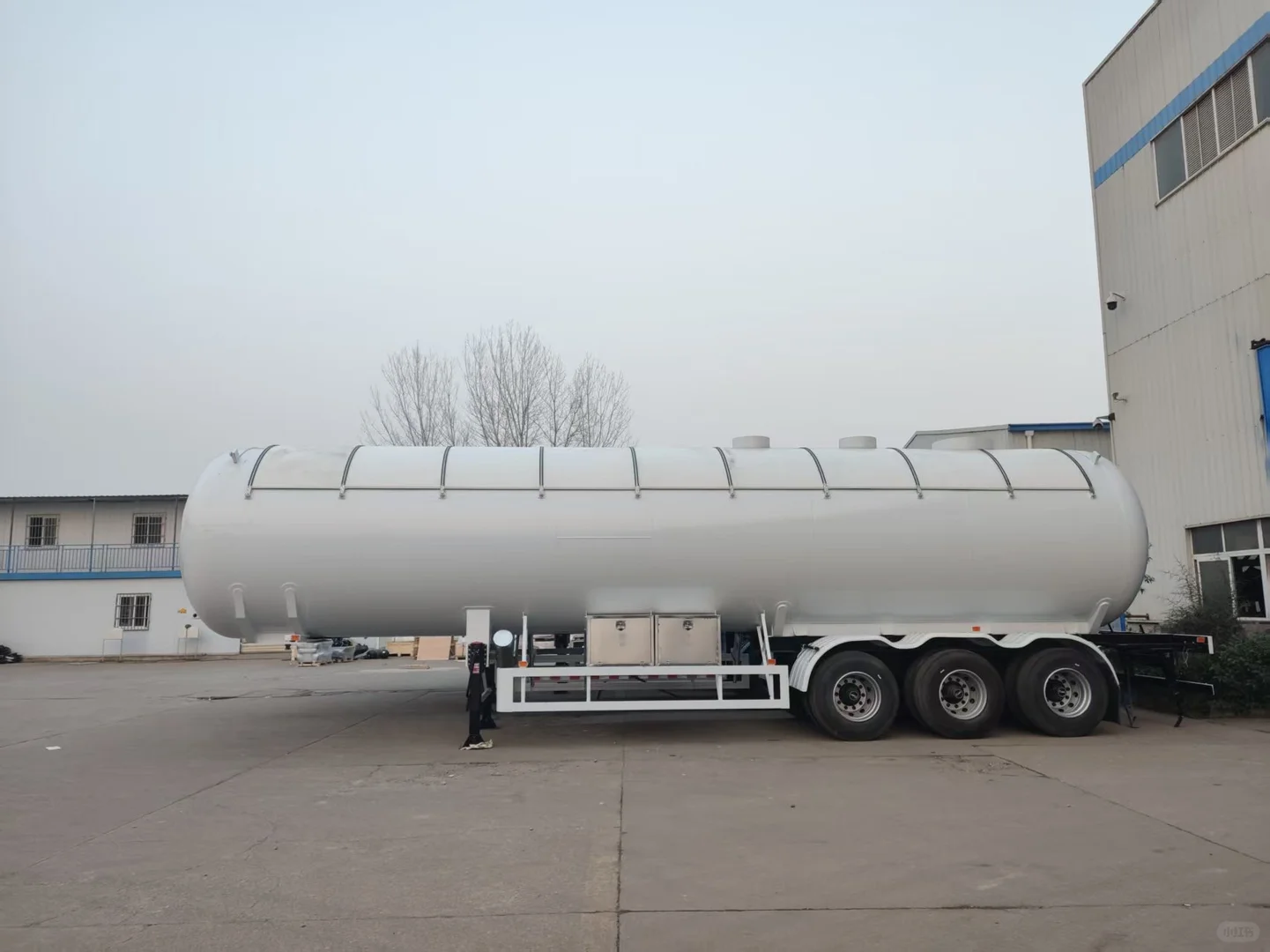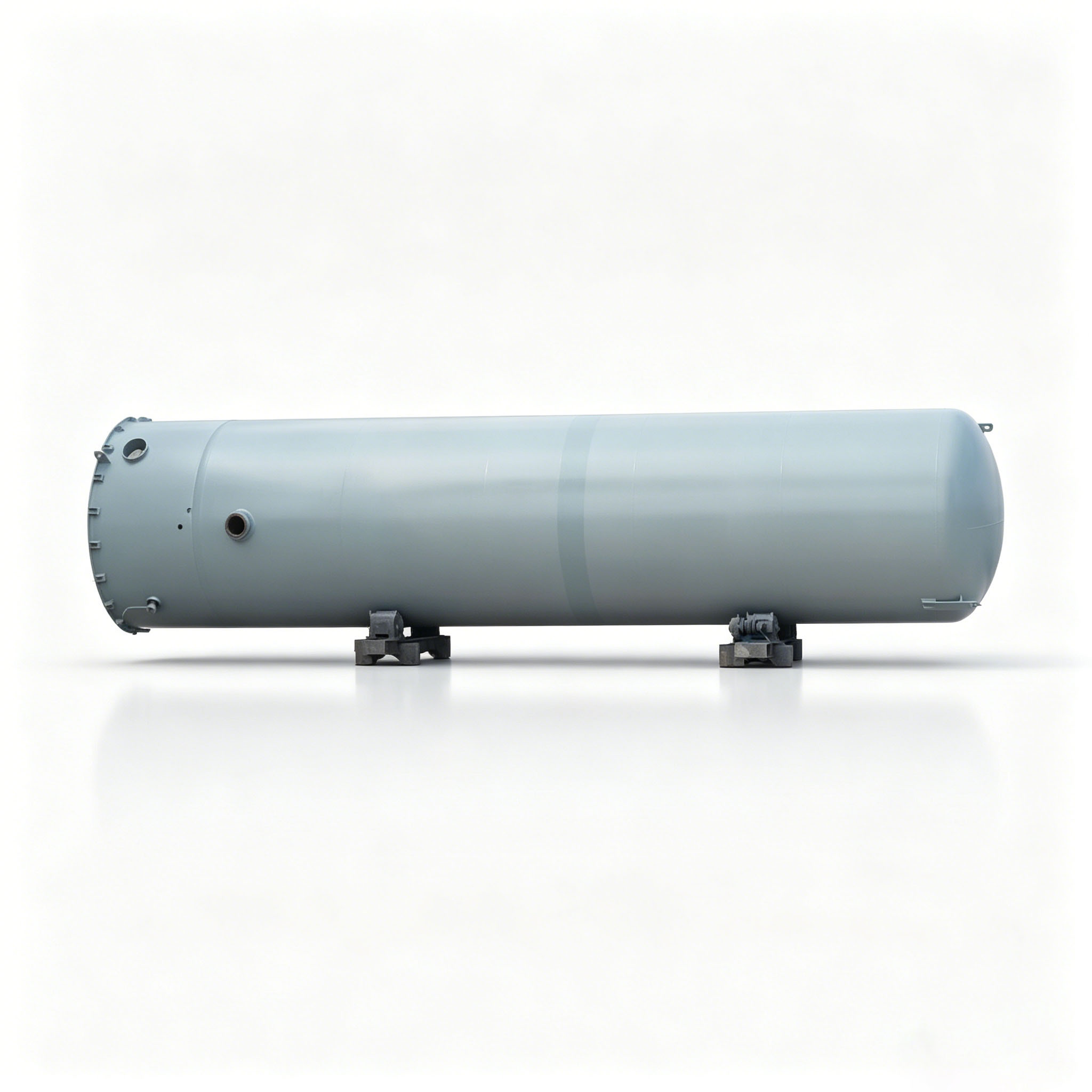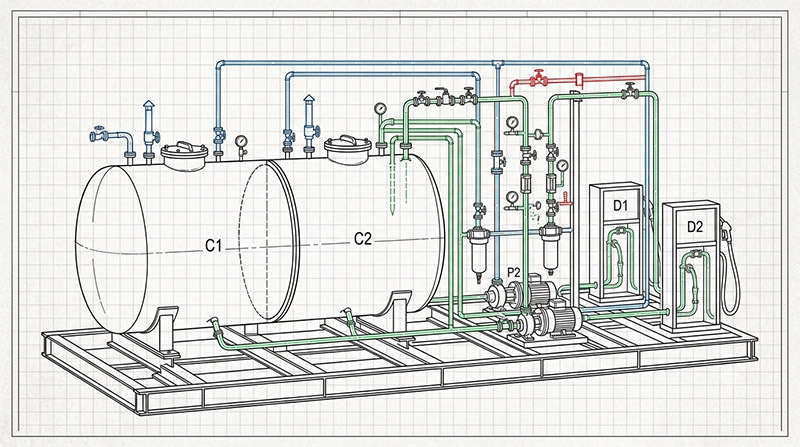
A dual- or multi-compartment skid-mounted fueling station integrates the fuel tank, dispenser, automatic fire suppression system, unloading setup, and electrical controls into a single metal skid or container frame. The primary purpose of a multi-compartment design is to store multiple fuel types (e.g., gasoline and diesel, or different grades of fuel) within a compact footprint.
Below is a detailed breakdown of how these systems work, the key manufacturing hurdles, and the main operational challenges.
1. Core Operating Principles
A multi-compartment skid station is not simply a large tank cut into sections. Instead, it relies on physical isolation and dedicated subsystems to ensure safe operation:
- Double-Wall Tank & Internal Bulkheads
- Internal Bulkheads: The tank interior is divided by reinforced double-wall bulkheads. This creates completely isolated, leak-proof compartments, allowing safe storage of fuels with vastly different flash points (such as gasoline and diesel) without cross-contamination.
- Double-Wall Leak Detection: The outer tank typically uses FF (double-wall fiberglass) or SF (steel-inner, fiberglass-outer) construction. The interstitial space between layers is equipped with high-precision leak detectors (liquid or pressure-based) that trigger an immediate alarm if an inner wall leaks.
- Dedicated Piping & Venting Systems
- Isolated Fuel Inlet and Outlet Lines: Each compartment has its own dedicated unloading port, suction line, static grounding, and delivery piping. Shared piping is strictly prohibited to prevent fuel mixing.
- Independent Venting Systems: Gasoline and diesel have very different vapor pressures. Gasoline compartments require Stage I/II vapor recovery and flame-arrestor vent valves, whereas diesel compartments do not require vapor recovery. Consequently, vent lines for each compartment must run independently.
- Multi-Hose Fuel Dispensers
- The integrated dispenser features separate metering pumps and meters connected directly to the delivery lines of each compartment. A Skid Control Unit manages independent fueling and transactions for each fuel type.
2. Manufacturing & Production Challenges
For manufacturers, producing multi-compartment skid stations demands higher precision, stricter safety compliance, and more complex piping integration than single-compartment units:
| Manufacturing Step | Key Difficulties & Technical Points |
| Weld Quality & Leak Prevention | Internal bulkheads must withstand uneven lateral pressure caused by varying fuel levels in adjacent compartments. Double-sided welds on bulkheads require zero defects; even a microscopic pore can lead to fuel cross-contamination. Explosive-suppression materials (aluminum mesh or foam) must also be placed precisely after weld inspections. |
| Compact Piping Layout | Containerized skids offer very limited space. Adding compartments multiplies the required unloading, suction, vent, vapor recovery, and ATG (Automatic Tank Gauge) lines. To prevent mechanical interference, manufacturers must rely on 3D CAD modeling (e.g., SolidWorks) for precise piping layout. |
| Explosion-Proofing & Electrical Isolation | Gasoline zones are classified as Hazardous/Explosive Environments. Control panels, dispensers, and pumps must strictly meet Ex d / Ex e explosion-proof ratings. With more compartments, cable routing and wall-penetration sealing become significantly more complex. |
| Structural Weight & Lifting Balance | Uneven fuel distribution across compartments (e.g., one side full, one side empty) shifts the center of gravity. The base frame must be engineered using Finite Element Analysis (FEA) to prevent structural warping during lifting, transport, or long-term use. |
3. Operational & Maintenance Challenges
Once deployed, operators face several practical and compliance-related hurdles:
1. Risk of Fuel Mis-fueling and Vapor Cross-Contamination
- Unloading Errors: During tanker delivery, an operator might accidentally connect a diesel hose to a gasoline inlet (or vice versa). Multi-compartment stations must use clear color coding, keyed mechanical couplings, or smart anti-mixing systems at the unloading ports.
- Vapor Hazards: If vent lines from gasoline and diesel compartments are accidentally interconnected, gasoline vapor can migrate into the diesel tank. This lowers the flash point of the diesel, creating a severe fire hazard.
2. Complex Level Gauging and Calibration
- ATG Precision: In smaller compartments, liquid sloshing and thermal expansion are more pronounced. Calibrating magnetostrictive level probes across multiple small compartments is considerably harder than in large single tanks.
- Inventory Loss Calculations: Frequent deliveries across smaller compartments make temperature compensation and residual oil calculations trickier, placing higher demands on the Fuel Management System (FMS).
3. Regulatory Approval and Clearance Distance Limits
- Fire Safety & Approvals: Even with explosion-suppression technology (complying with standards like GB 50156 or UL 142/UL 2085), local authorities often enforce strict environmental (EIA) and fire safety approvals for multi-compartment units containing gasoline.
- Overlapping Work Zones: Because skid stations are compact, the refueling area and tanker unloading area often overlap. Operating multiple compartments simultaneously requires rigid Standard Operating Procedures (SOPs) and safety barriers.
Summary: The engineering key to multi-compartment skid stations lies in compact 3D piping design and zero-defect bulkhead welding. For operations, the priority is foolproof mechanical inlets and strictly separated vapor venting.