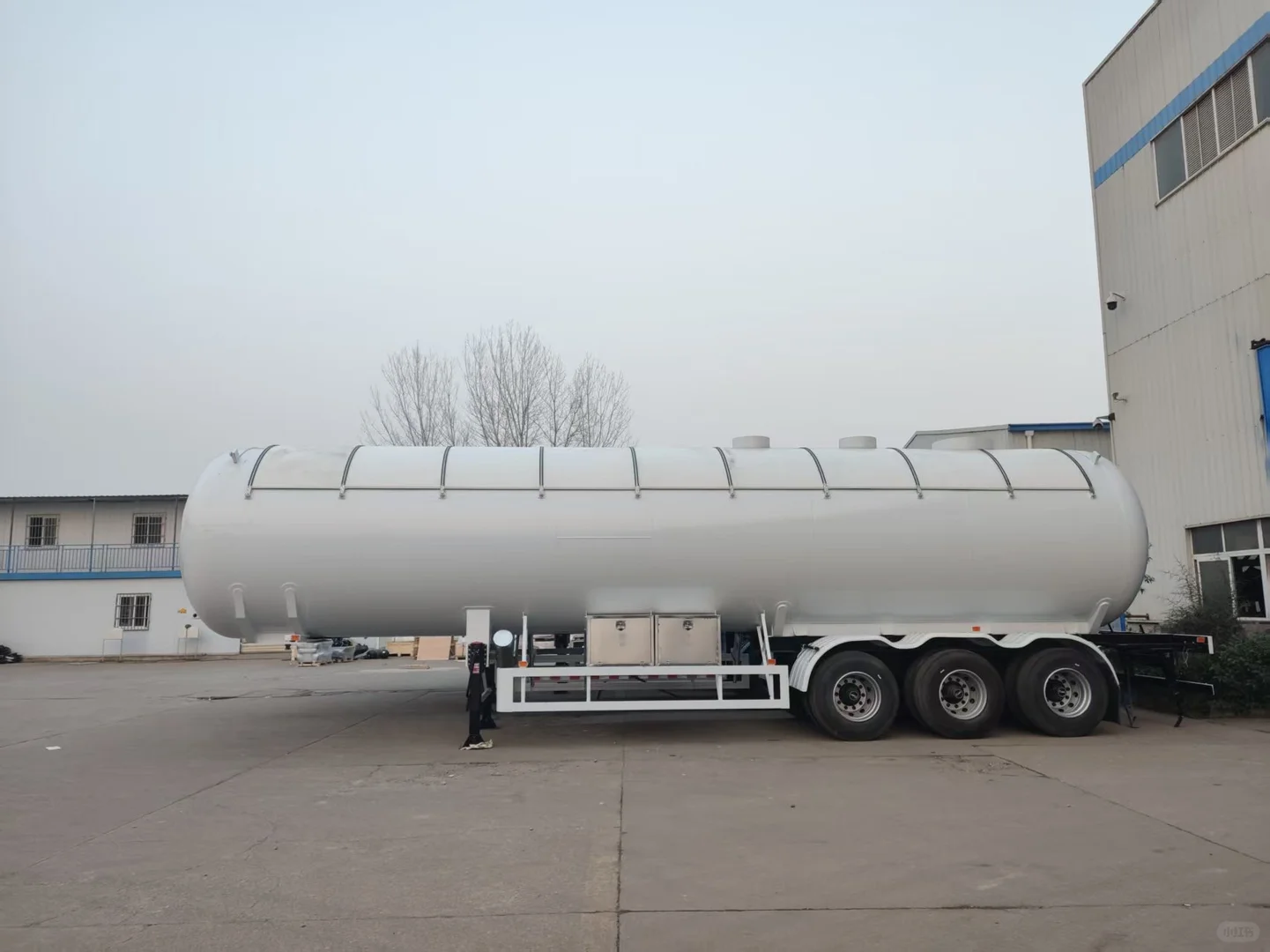
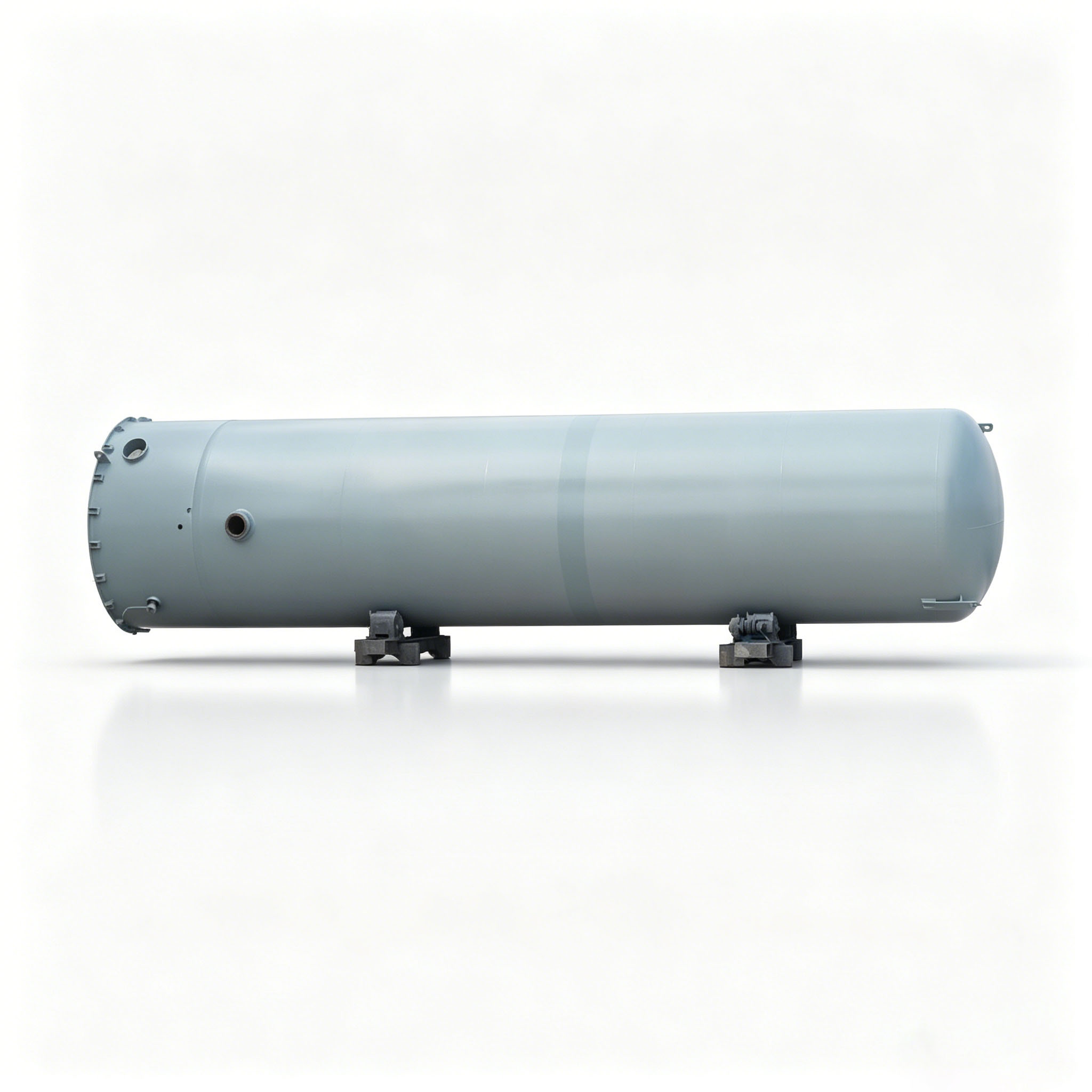
An LNG (Liquefied Natural Gas) fuel tank for heavy-duty trucks functions as a specialized, large-capacity cryogenic vessel. Unlike standard diesel tanks designed solely for ambient-liquid containment, an LNG fuel tank is a complex, double-walled, vacuum-insulated pressure vessel engineered to maintain natural gas in its liquid state at a cryogenic temperature of -162°C.
I. Structural Principles of On-Board LNG Cylinders

To maintain an internal cryogenic temperature of -162°C for extended periods under high ambient temperatures (e.g., direct exposure to 38°C summer heat), the cylinder utilizes a “double-jacketed” structural design:
- Inner Vessel: In direct contact with the liquid LNG, this component is typically fabricated from SS304 or SS316L austenitic stainless steel to ensure high impact toughness and resistance to cryogenic embrittlement.
- Outer Shell: Serves to protect the inner vessel and withstand external mechanical impacts. It is generally constructed from carbon steel (such as Q345R) or stainless steel.
- Interlayer (Vacuum Insulation Area): The annular space between the inner vessel and the outer shell is evacuated to a high vacuum and wrapped with dozens of layers of aluminum foil and cryogenic insulation paper (high-vacuum multilayer insulation technology). This configuration minimizes heat transfer via conduction, convection, and radiation.
II. Core Technical Indicators for Evaluating LNG Cylinder Quality
In B2B procurement and industrial manufacturing, professional buyers evaluate the performance and quality of an on-board LNG cylinder based on the following seven technical parameters:

1. Static Evaporation Rate (Boil-Off Rate / BOR)
- Definition: The daily percentage of gas naturally vaporized and vented due to external heat ingress when the cylinder is at maximum fill capacity, and the vehicle engine is idle (zero gas consumption).
- Performance Standard: A lower value indicates superior thermal insulation. Premium industrial-grade cylinders limit the daily boil-off rate to under 1.0%, with high-tier products achieving 0.8% or lower.
- Commercial Impact: High evaporation rates lead to rapid pressure buildup within the vessel during periods of vehicle inactivity (e.g., weekend shutdowns). This triggers the automatic opening of the safety valve to vent gas, resulting in direct fuel loss and increased environmental emissions.
2. Vacuum Holding Lifespan
- Definition: The duration for which the annular space can maintain its rated vacuum level without significant degradation.
- Performance Standard: High-quality cylinders feature an ultra-high initial vacuum level and incorporate getters within the interlayer to absorb trace outgassing. Reliable products typically guarantee a vacuum lifespan of 3 to 5 years or longer.
- Commercial Impact: Deficiencies in welding integrity or microstructural defects in materials can cause vacuum degradation within 1 to 2 years. This manifests as external shell sweating or frosting, leading to sharp pressure increases and compromised thermal performance, which necessitates factory re-evacuation and increases fleet downtime.
3. Filling Ratio (Volumetric Efficiency)
- Definition: The ratio of the maximum allowable volume of liquid LNG filled to the total internal volume of the cylinder.
- Performance Standard: International regulatory standards strictly mandate that the filling ratio must not exceed 90%. This reserves a minimum 10% vapor space as a safety buffer to prevent catastrophic over-pressurization caused by thermal expansion of the liquid. Optimally designed systems utilize high-precision filling limit valves to maximize effective volume while maintaining absolute safety boundaries.
4. Tare Weight (Lightweight Design)
- Definition: The unladen mass of the cylinder assembly.
- Performance Standard: Minimizing tare weight while preserving structural integrity is critical. Advanced manufacturers optimize stainless steel wall thickness, enhance shell geometries, and utilize lightweight alloy brackets to achieve a weight reduction of 10% to 20%.
- Commercial Impact: Commercial vehicles operate under strict legal gross vehicle weight ratings (GVWR). Every 60 kg reduction in tare weight allows for an additional 60 kg of payload capacity, directly improving the long-term profitability of logistics operations.
5. Working Pressure & Safety Valve Set Pressure
- Definition: The nominal operating pressure range of the cylinder (typically between 0.8 and 1.59 MPa) and the predetermined pressure threshold at which the safety valve actuates.
- Performance Standard: Pressure regulation must be precise and stable, requiring highly responsive integrated valve blocks (including economizer (ECON) valves, excess flow valves, and pressure regulators). Substandard valve components can lead to insufficient fuel supply under high-load conditions (e.g., hill climbing) or premature pressure venting.
6. Vibration & Fatigue Resistance
- Definition: The capacity of the internal support structures and welded joints to withstand continuous mechanical vibrations, torsional stresses, and high-frequency shocks during heavy-duty transport on degraded road surfaces.
- Performance Standard: Components must pass rigorous mechanical vibration testing and tens of thousands of pressure fatigue cycles. The support blocks isolating the inner and outer vessels (typically made of low-thermal-conductivity fiberglass-reinforced plastics or specialized composites) must not shift, deform, or fracture under multidirectional structural loads.
7. Safety Configurations & Regulatory Compliance
- Definition: The physical protection mechanisms, active mitigation systems, and structural integrity of the vessel under extreme conditions (e.g., fire exposure, high-energy impacts, vehicle rollovers) involving cryogenic and flammable media.
- Core Standards:
- Multi-Stage Pressure Relief System: Dual safety valves (“primary + secondary”) must be installed. In the event of primary valve failure or abnormal boil-off surges, the secondary valve must actuate instantly to guarantee pressure relief.
- Sealing Integrity: Valve box components must utilize dedicated cryogenic stainless steel valves, and connections must feature high-pressure vacuum seals resistant to thermal cycling.
- Extreme Survivability: The vessel structure must pass a 590°C bonfire test (maintaining integrity without explosion for a specified duration), heavy-duty drop tests, and high-energy impact testing. All critical structural welds must undergo 100% Ultrasonic Testing (UT) and Radiographic Testing (RT) to ensure zero internal defects.
- Commercial Impact: Compliance with safety specifications is mandatory for market entry. For hazardous chemical transport fleets, test reports confirming compliance with GB/T 34510 (the national standard for on-board LNG cylinders) or equivalent international frameworks (such as ASME or ECE R110) are required for vendor qualification.
Summary: Technical Profile of a Premium LNG Cylinder
The following technical profile characterizes a highly competitive LNG fuel tank in the global B2B market:
High Vacuum Integrity + Static Evaporation Rate < 1.0% + Lightweight Design + ASME / ECE R110 Certification + 3-Year Vacuum Warranty