Operating hazardous materials (Hazmat) logistics in Thailand—covering LNG, LPG, and industrial chemicals—presents significant legal and operational hurdles. Thailand’s regulatory framework integrates the UN Recommendations on the Transport of Dangerous Goods (UN RTDG) and European ADR standards, alongside strict national curfew and axle load restrictions.
Equipment designed for this market must balance light tare weights for compliance with precise engineering suited to humid, tropical environments.
1. Regulatory Framework & Operational Restrictions
Hazmat transportation in Thailand is jointly governed by the Department of Land Transport (DLT) and the Department of Industrial Works (DIW) under the Hazardous Substance Act B.E. 2535.
Strict Time Curfews
Here is the clear, structured Markdown table formatted in English based on your ASCII text:
Bangkok Hazmat Transport Time Restrictions
| Location / Road Type | Time Window | Operational Status & Rules |
| Bangkok & Urban Road Network | 00:00 – 06:00 | Open (Primary window for Hazmat transportation) |
06:00 – 22:00 | Restricted (Prohibited for 6+ wheelers and tankers) | |
| Expressways | 06:00 – 10:00 | Restricted (Morning peak restriction) |
10:00 – 15:00 | Open (Off-peak window) | |
15:00 – 22:00 | Restricted (Evening peak restriction) | |
22:00 – 06:00 | Open (Overnight window) |
To manage urban traffic congestion and lower risk profiles, Thailand enforces time-based curfews on heavy vehicles and Hazmat transports.
- Urban & Arterial Roads: Vehicles with 6 or more wheels, fuel tankers, and gas carriers are banned from entering city limits and main arterials between 06:00 and 22:00 daily (except Sundays). Consequently, cross-regional transport and port logistics operate primarily during late-night and early-morning hours (22:00 to 06:00).
- Expressways: Chemical tankers face complete bans during peak rush hours: 06:00–10:00 and 15:00–22:00.
Certification & Labeling Compliance
- Hazmat Licensing: Transport entities must secure a Type 3 Hazardous Substance Possession/Transport Permit from the DIW, supported by a valid Shipper’s Declaration for Dangerous Goods.
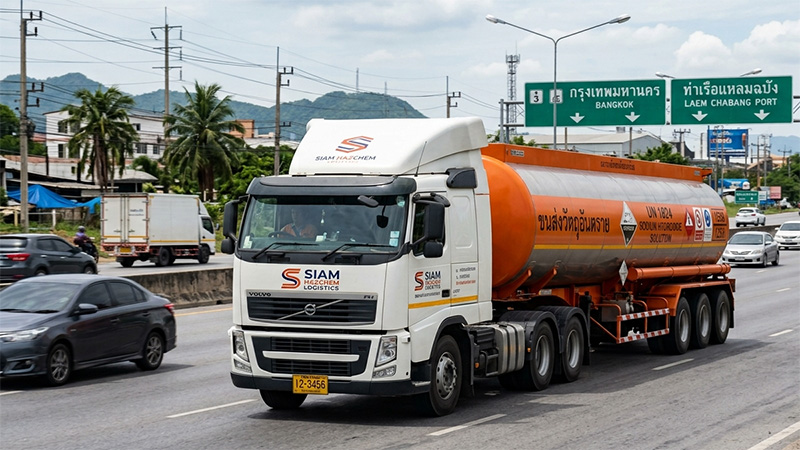
- Vehicle Marking: Transport units require UN-compliant hazard placards, UN numbers, and bilingual (Thai/English) warning notices displayed on all sides.
- Documentation: Vehicles must carry physical copies of Safety Data Sheets (SDS) in Thai, along with localized Emergency Response Guides (ERG).
Mandatory Vehicle Telematics & Safety Hardware
- DLT-Linked GPS: All heavy trucks, tractors, and Hazmat trailers must feature a DLT-certified real-time GPS tracking system. This feeds location, route, and speed data directly to the DLT central monitoring database 24/7.
- Active Safety Systems: Heavy trucks and tractors with more than 6 wheels require Anti-lock Braking Systems (ABS). Driver fatigue monitoring systems and multi-channel cameras are increasingly required under modern fleet mandates.
2. Vehicle Axle Load Limits & Total Weight Mandates
The Department of Highways stringently enforces gross vehicle weight limits to protect infrastructure. Overloading penalties include substantial fines, license revocation, and up to 6 years imprisonment. Weight allowances depend directly on axle numbers and tire configurations.
Gross Vehicle Weight Limits (GVW)
| Vehicle Configuration | Axle / Wheel Count | Max Allowable GVW |
| 6-Wheel Rigid Truck | 2 Axles / 6 Wheels | 15.0 tonnes |
| 10-Wheel Rigid Truck | 3 Axles / 10 Wheels | 25.0 tonnes |
| 12-Wheel Rigid Truck | 4 Axles / 12 Wheels | 30.0 tonnes |
| Standard Heavy Semi-Trailer Combination | 6 Axles / 22 Wheels (e.g., 3-axle tractor + 3-axle tank trailer) | 50.5 tonnes |
Individual & Group Axle Limits
- Single Axle (Steer Axle): Limited to 6.0 – 8.2 tonnes, depending on tire specs.
- Tandem Axle Group (Rear Dual Axles): Limited to 16.4 – 20.0 tonnes when fitted with dual tires.
Design Note for Export Trailers:
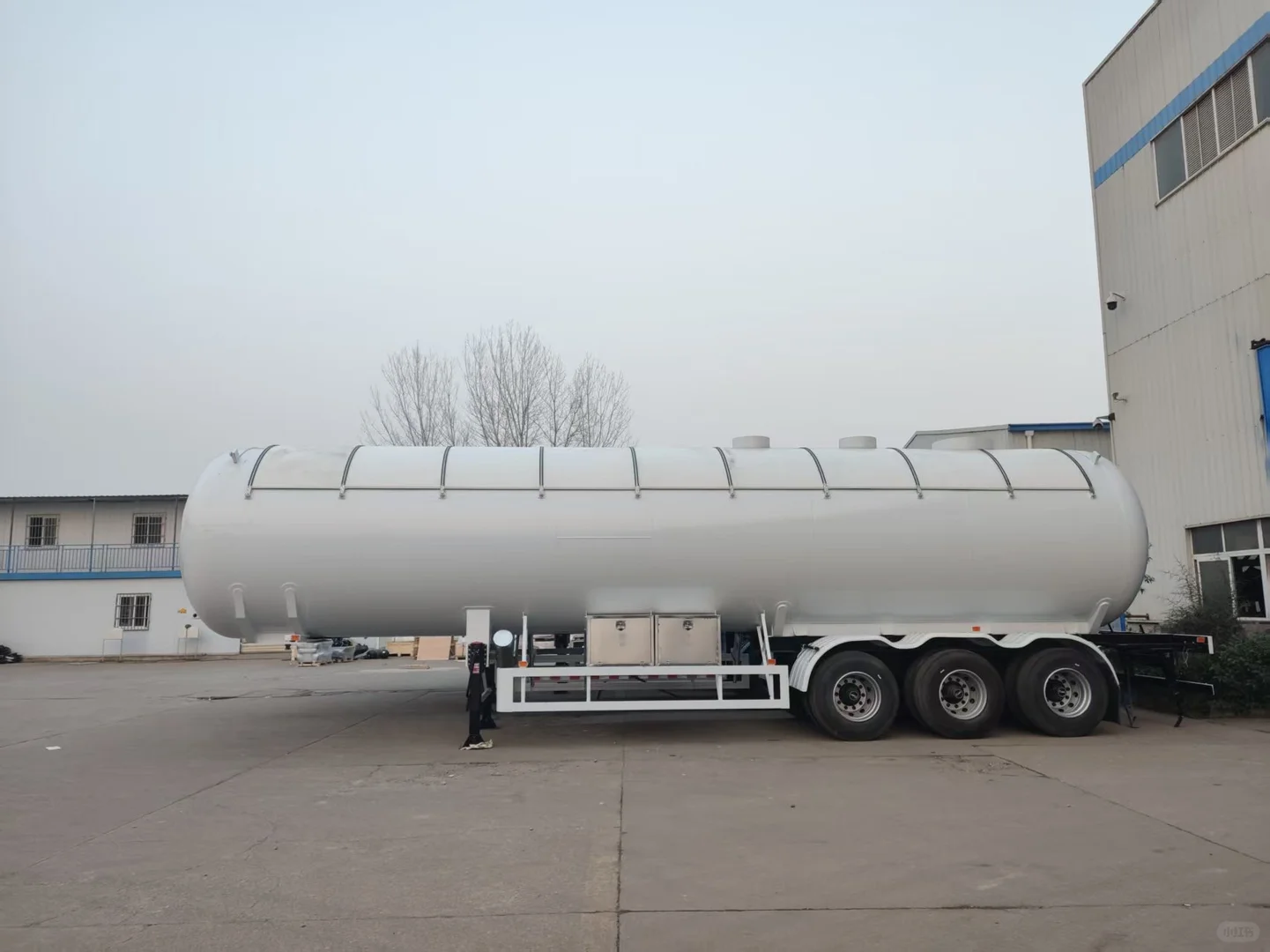
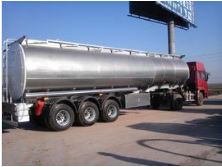
For semi-trailer tanks (such as 20 m³ gas or liquid chemical tankers) bound for Thailand, precise calculation of tare weight versus media density is critical. Given the hard 50.5-tonne GVW limit for 6-axle combinations, minimizing tractor and trailer kerb weight is essential to maximize payload efficiency without exceeding legal limits.
3. Climate Engineering Requirements
Thailand’s tropical monsoon climate presents extreme conditions: high ambient heat during the hot season (March–May, often exceeding 40°C) and heavy rainfall with standing water during the wet season (June–October). Hazmat hardware must be specified to withstand these environmental pressures.
Thermal Protection for Pressure Vessels (40°C+ Ambient)
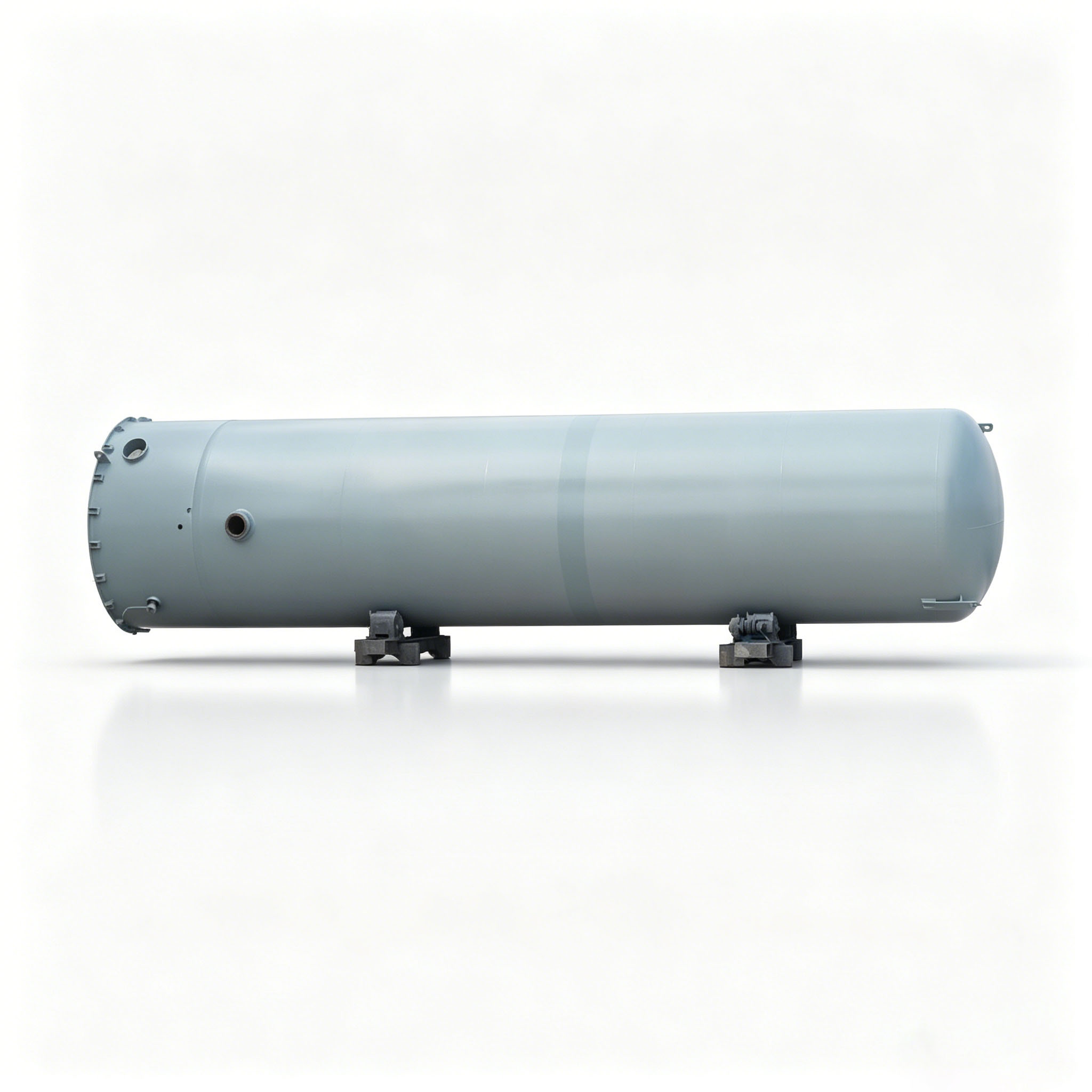
- Design Pressure & Solar Radiation: Cryogenic (LNG) and liquefied gas (LPG) tanks must account for radiant surface heat up to 50°C. Maximum Allowable Working Pressure (MAWP) and relief valve settings require adequate safety margins.
- Thermal Insulation: Cryogenic vessels rely on high-vacuum multi-layer insulation to keep Boil-off Rates (BOR) low during traffic delays or daylight parking. Volatile non-cryogenic chemical tanks frequently use full-coverage sunshields (sun canopies) to minimize heat absorption and pressure buildup.
- Elastomers & Valves: Emergency Shut-Off Valves (ESD), pressure relief valves, and internal seals require high-temperature, age-resistant materials (such as Viton fluoropolymers) to prevent thermal degradation and leakage.
Corrosion Resistance & Wading Capabilities
- Corrosion Protection: High humidity combined with coastal air near major shipping hubs (such as Laem Chabang Port) accelerates corrosion. Structural steel chassis require heavy-duty anti-corrosion coatings (e.g., zinc-rich primers with epoxy topcoats), stainless steel (SS316L), or aluminum alloys. Tank insulation jackets must be sealed against moisture ingress to prevent Corrosion Under Insulation (CUI).
- Water Ingress & Ingress Protection (IP): Flash flooding during the rainy season requires all exterior electrical boxes, GPS telemetry terminals, and solenoid coils on safety valves to meet IP67 or IP69K waterproof and dustproof ratings to avoid short-circuiting during water crossings.
- Braking & Auxiliary Retarders: Wet roads require consistent braking performance. Heavy Hazmat units rely on hydraulic retarders or engine exhaust brakes to reduce brake fade and maintain control on mountain passes, such as those in Northern Thailand.
Summary Checklist for Equipment Exporters
- Weight Optimization: Enforce strict structural weight limits to stay under the 50.5-tonne GVW limit for 22-wheel combinations.
- Thermal Calculation: Rate tank shell design, vacuum insulation, and relief valves for high ambient exposure ($\ge 50^\circ\text{C}$).
- Environmental Durability: Specify IP67/IP69K electronics, marine-grade anti-corrosion coatings, and high-temperature seals across all mechanical assemblies.