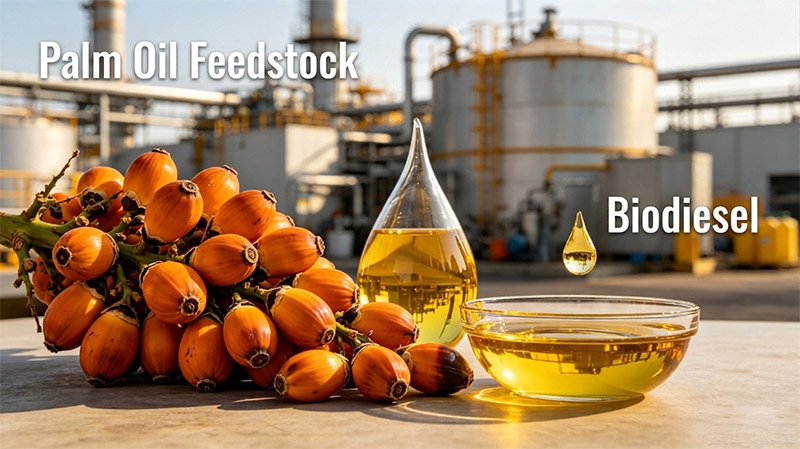
Storing biodiesel derived from palm oil—commonly referred to as Palm Oil Methyl Ester (PME)—presents unique chemical and physical challenges compared to conventional petroleum diesel. Selecting the right tank material is critical to balancing initial capital expenditure against long-term maintenance costs and fuel quality.
1. Palm Oil Biodiesel Thresholds & Corrosion Acceleration
Biodiesel is inherently more hygroscopic (water-absorbing) than petroleum diesel and is prone to oxidative degradation, which produces volatile organic acids.
| Low Blends: B5 – B20 | High Blends: B20 – B100 |
| Corrosion rates near B0 | Rapid oxidation & TAN increase |
| Mild steel acceptable with standard maintenance | High water absorption |
| Exponential carbon steel corrosion |
The Critical Threshold: B20 (20% Blend)
- Below B20 (B5 to B20): Carbon steel exhibits corrosion rates comparable to standard diesel storage (<0.005mm/year or <0.2 mpy). Standard carbon steel tanks without specialized internal lining perform reliably with routine dewatering.
- Above B20 (B30, B50, and B100): Corrosion rates on bare carbon steel increase rapidly. Beyond B20, oxidation of unsaturated fatty acids in palm biodiesel accelerates, forming short-chain carboxylic acids (formic, acetic, and propionic acids). This raises the fuel’s Total Acid Number (TAN).
- Pure Palm Biodiesel (B100): Exposure to bare carbon steel significantly speeds up uniform corrosion and localized pitting. The reaction generates iron soaps, which plug fuel filters downstream and compromise the structural integrity of unlined carbon steel tanks over time.
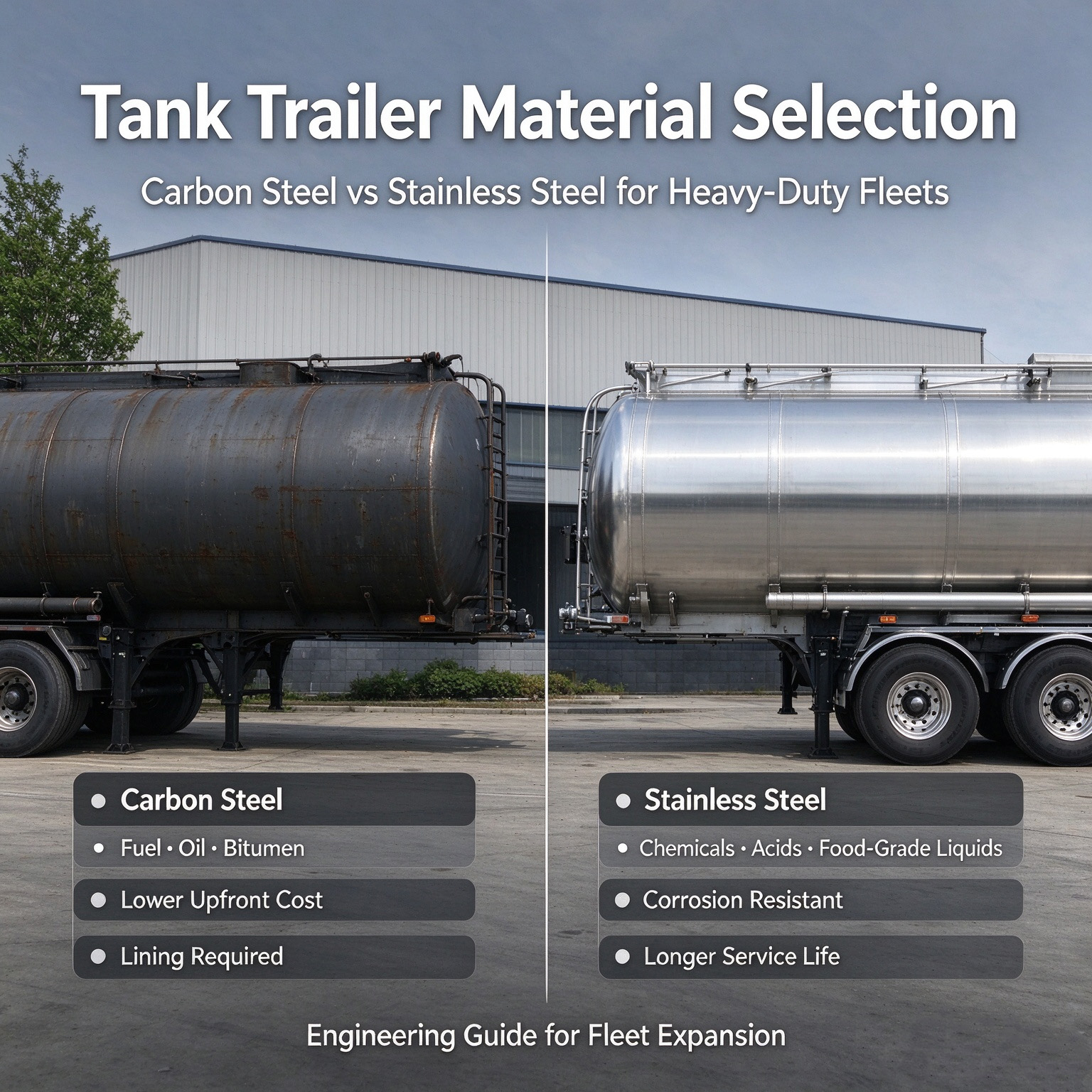
2. Carbon Steel vs. Stainless Steel: Side-by-Side Comparison
| Feature | Carbon Steel (e.g., Q235B, ASTM A36) | Stainless Steel (e.g., SS304 / SS316L) |
| Initial Capital Cost | Low (1x base cost) | High (2.5x to 4x cost of carbon steel) |
| Corrosion Resistance | Moderate (requires internal lining for high blends) | Exceptional (forms passive chromium oxide layer) |
| Service Lifespan | 15–20 years (with aggressive maintenance) | 30–50+ years (with minimal maintenance) |
| Fuel Quality Protection | Risk of iron leaching and rust particulate formation | Zero fuel degradation or metal leaching |
| Maintenance Overhead | High (frequent coating checks, dewatering, NDT checks) | Very Low (routine visual checks & cleaning) |
Summary Verdict: Stainless steel (SS304 for room temperature, SS316L for elevated temperatures or high-acid feedstocks) is the gold standard for pure PME (B100) or high blends. However, carbon steel remains a viable option for high-blend storage IF fitted with an advanced lining system and paired with rigorous moisture control protocols.
3. Maintaining Carbon Steel Tanks for High-Blend Palm Biodiesel
If carbon steel is selected for storing high-blend (B20+) or pure palm biodiesel, specific engineering controls and maintenance practices must be implemented to prevent rapid structural degradation:
A. Advanced Internal Lining Systems
Uncoated carbon steel should never directly touch high-blend palm biodiesel.
- Lining Types: Apply high-build, 100% solids amine-cured epoxy, Novolac epoxy, or phenolic epoxy interior coatings.
- Application: Surface preparation must reach SSPC-SP 10 / NACE No. 2 (Near-White Blast Cleaning) with a anchor profile of 50–75 μm prior to coating application.
B. Dry Nitrogen Blanketing
- Palm biodiesel readily absorbs atmospheric humidity. Water settles at the bottom of the tank, forming a corrosive aqueous layer that triggers microbial growth (microbiologically influenced corrosion, or MIC).
- Installing a low-pressure nitrogen blanket system (0.5–1.0 kPa) above the liquid level prevents ambient air and moisture from entering the vapor space, significantly slowing oxidation.
C. Desiccant Breathers
- If nitrogen blanketing is cost-prohibitive, install heavy-duty silica gel desiccant air breathers on tank vents to capture incoming atmospheric moisture during thermal breathing and product pump-out.
D. Bottom Sump & Automatic Dewatering
- Design carbon steel tanks with a sloped bottom (1:50 or 1:100 slope) leading to a central collection sump equipped with an automatic or manual low-point drain valve.
4. Operational & Inspection Maintenance Protocols
A preventive maintenance program ensures long-term safety and extends tank service life regardless of material choice.
| DAILY | MONTHLY | ANNUAL / PERIODIC |
| Sump Dewatering | TAN & Water Content | Ultrasonic Thickness (UTT) |
| Visual Leak Checks | Laboratory Testing | Internal Coating Inspection |
| Vent Line Checks | Filter Strainer Checks | Sump Sediment Cleanout |
1. Water Dewatering & Sampling (Daily / Weekly)
- Frequency: Daily for high-throughput commercial terminals; weekly for low-throughput facilities.
- Procedure: Drain 5–10 liters from the bottom sump into a clear container. Check for free water, turbidity, phase separation, or rag-layer sludge.
2. Fuel Quality & Acid Value Monitoring (Monthly)
- Total Acid Number (TAN): Test stored fuel monthly per ASTM D664 or EN 14104.
- Warning Limit: Standard biodiesel TAN limit is 0.50 mg KOH/g. If TAN exceeds 0.80mg KOH/g, the fuel has degraded into acidic compounds that will attack internal tank components and pumps.
3. Ultrasonic Thickness Testing (UTT) (Annual)
- Perform non-destructive Ultrasonic Thickness Testing on the bottom shell ring, tank floor, and heat-affected zones (HAZs) along weld lines.
- Establish baseline thickness readings at installation and monitor wall loss trends over time.
4. Internal Coating & Holiday Inspection (Every 3 to 5 Years)
- Drain and clean carbon steel tanks for internal visual inspection.
- Perform high-voltage spark testing (holiday detection) on internal epoxy coatings to identify pinholes, blisters, or micro-fractures before corrosion penetrates the underlying carbon steel shell.