Executive Summary
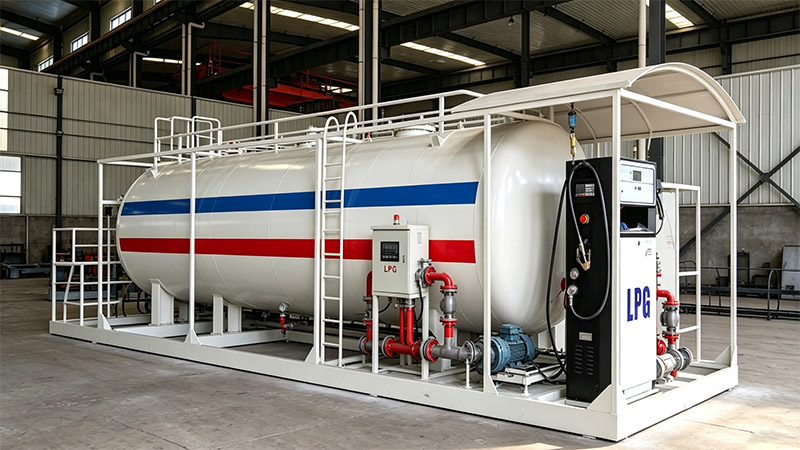
Over the past three years, South Africa’s skid-mounted fuel station market has demonstrated steady growth as a pivotal segment within the broader Middle East and Africa (MEA) emerging market. Driven primarily by off-grid industrial operations and infrastructure deficits, skid-mounted stations (locally referred to as “skid tanks”) have evolved from temporary alternatives into critical energy infrastructure. Over the next three years, the market is set to expand further, accelerating toward IoT-driven intelligence and potential multi-fuel transformations.
1. Development Summary (Past 3 Years): Demand-Driven Steady Growth
1.1 Market Role & Key Drivers
- Emerging Market Dynamics: South Africa is widely recognized within global reports as a high-potential market. Demand is predominantly driven by remote, field-based operations across core sectors: mining, agriculture, logistics, and construction.
- Bridging the Infrastructure Gap: Traditional brick-and-mortar retail fuel stations require high capital expenditure (CapEx) and long construction timelines. Skid-mounted stations have successfully filled this gap by offering a flexible, cost-effective, and rapidly deployable fuel supply solution for underserved areas.
2. Key Local Requirements & Regulatory Landscape
Understanding the South African market requires analyzing its strict regulatory environment and harsh operational conditions.
2.1 Compliance & Technical Standards
- SANS 10131 Compliance: South Africa enforces robust regulatory standards for above-ground petroleum storage. The primary benchmark is SANS 10131 (Above-ground Storage Tanks for Petroleum Products).
- Capacity Limits: Standard regulations permit a maximum total facility capacity of 200cbm, with individual tanks capped at 85cbm. Compliance with these design, manufacturing, and installation criteria is mandatory for market entry.
2.2 Operational Environment & Pillar Industries
- Harsh Operating Conditions: Mining sites and remote rural areas demand high equipment durability. Units must feature robust dust-proofing, seismic/vibration resistance, and thermal tolerance to withstand extreme weather.
- Mining-Centric Demand: Mining remains the backbone of the South African economy. Because mine sites are frequently far from urban centers, they represent the single largest and most critical application scenario for skid tanks.
3. Future Trends (Next 3 Years): Smart Upgrades & Energy Transition
| Dimension | Current Model | Near-Term Trend | Long-Term Vision |
| Primary Focus | Basic Equipment Sales | Equipment + IoT + Smart Platform | Multi-Energy Integration |
| Fuel / Energy Type | Standard Fuel (Diesel / Gasoline) | Standard Fuel + Digital Tracking | Biofuels, LNG, Hydrogen (H₂) |
| Core Technology | Manual / Standard Dispensing | Remote Tracking, Telemetry & Auto-Billing | Multi-Fuel Dispensing & Decarbonization Tech |
| Value Proposition | Low Initial CapEx, Rapid Deployment | Operational Efficiency, Theft Prevention & Security | Future-Proofing, Green Transition & ESG Alignment |
| Target Industry Scenario | Traditional Mining & Remote Sites | Fleet Logistics & Automated Industrial Operations | Sustainable Energy Hubs & Advanced Transport |
3.1 Sustained Market Expansion
Global mobile/skid fuel station markets are projected to grow at a Compound Annual Growth Rate (CAGR) of 6.9% to 8.5%. South Africa is expected to match or exceed this growth trajectory due to ongoing industrial fuel demand.
3.2 Shift Toward Integrated Smart Solutions
The industry is transitioning from standalone hardware sales to holistic “Hardware + IoT + Smart Management Platform” offerings. Key features driving operational efficiency and security include:
- Real-time remote level and telemetry monitoring.
- Automated fuel dispensing and inventory control.
- Integrated digital payment and automated billing systems.
3.3 Diversification and Green Energy Readiness
While diesel and gasoline currently dominate, equipment manufacturers are laying the groundwork for green energy transitions:
- Alternative Fuels: Systems designed to handle biofuels and Liquefied Natural Gas (LNG).
- Hydrogen Readiness: Growing research into skid-mounted hydrogen refueling stations indicates that the market is preparing for long-term decarbonization goals.
4. Strategic Recommendations
| Focus Area | Strategic Action |
| Regulatory Alignment | Ensure all tank designs explicitly meet or exceed SANS 10131 requirements. |
| Product Hardening | Reinforce structural integrity and thermal resistance for extreme mining environments. |
| Digital Integration | Pre-install IoT sensors and smart fuel management software to offer end-to-end operational visibility. |
Note on Methodology: Specific insights regarding local South African needs (e.g., SANS standards and mining reliance) are deduced from local regulatory frameworks and macroeconomic industry profiles, as standalone granular market reports on South African skid stations specifically remain limited.