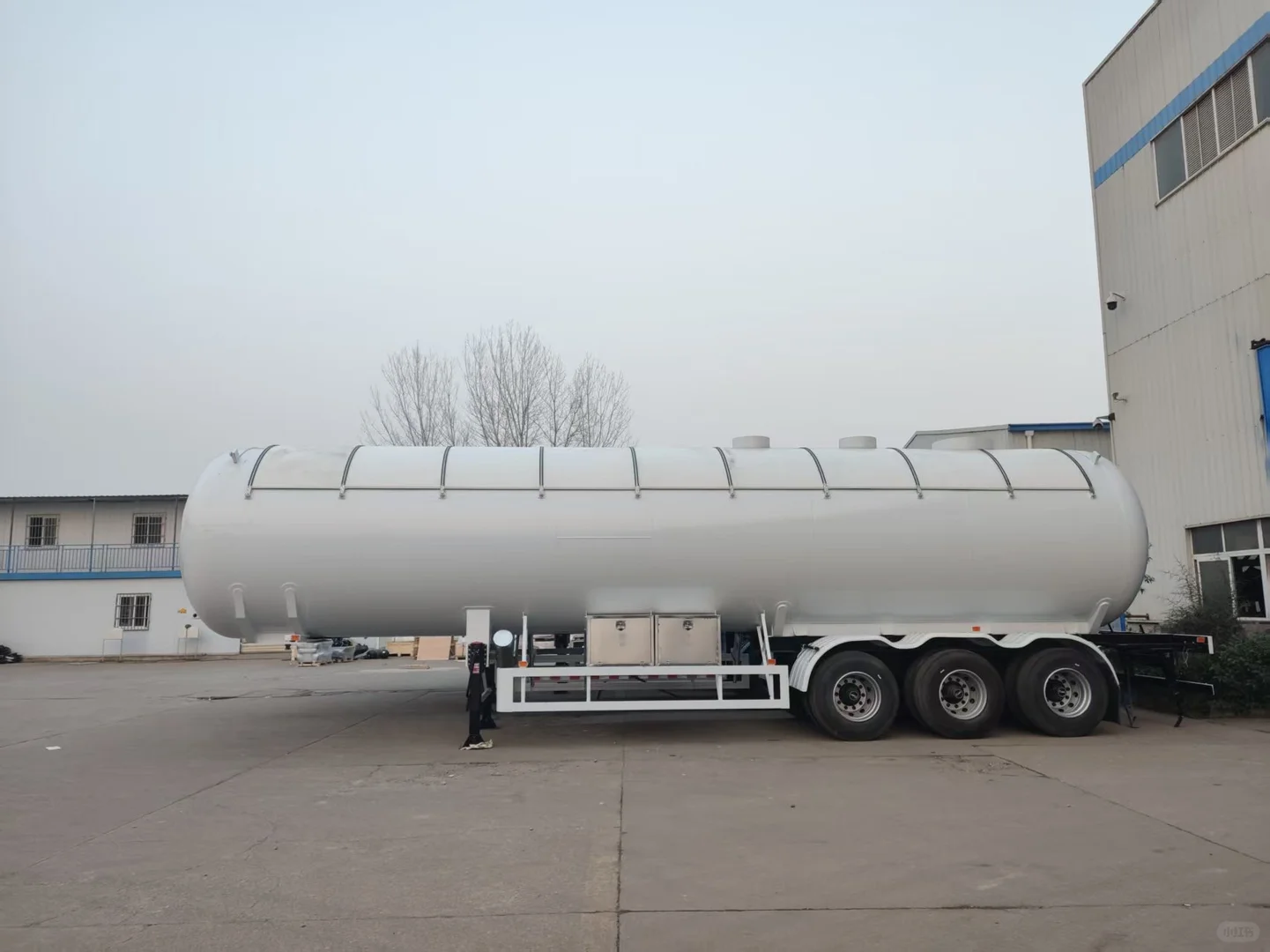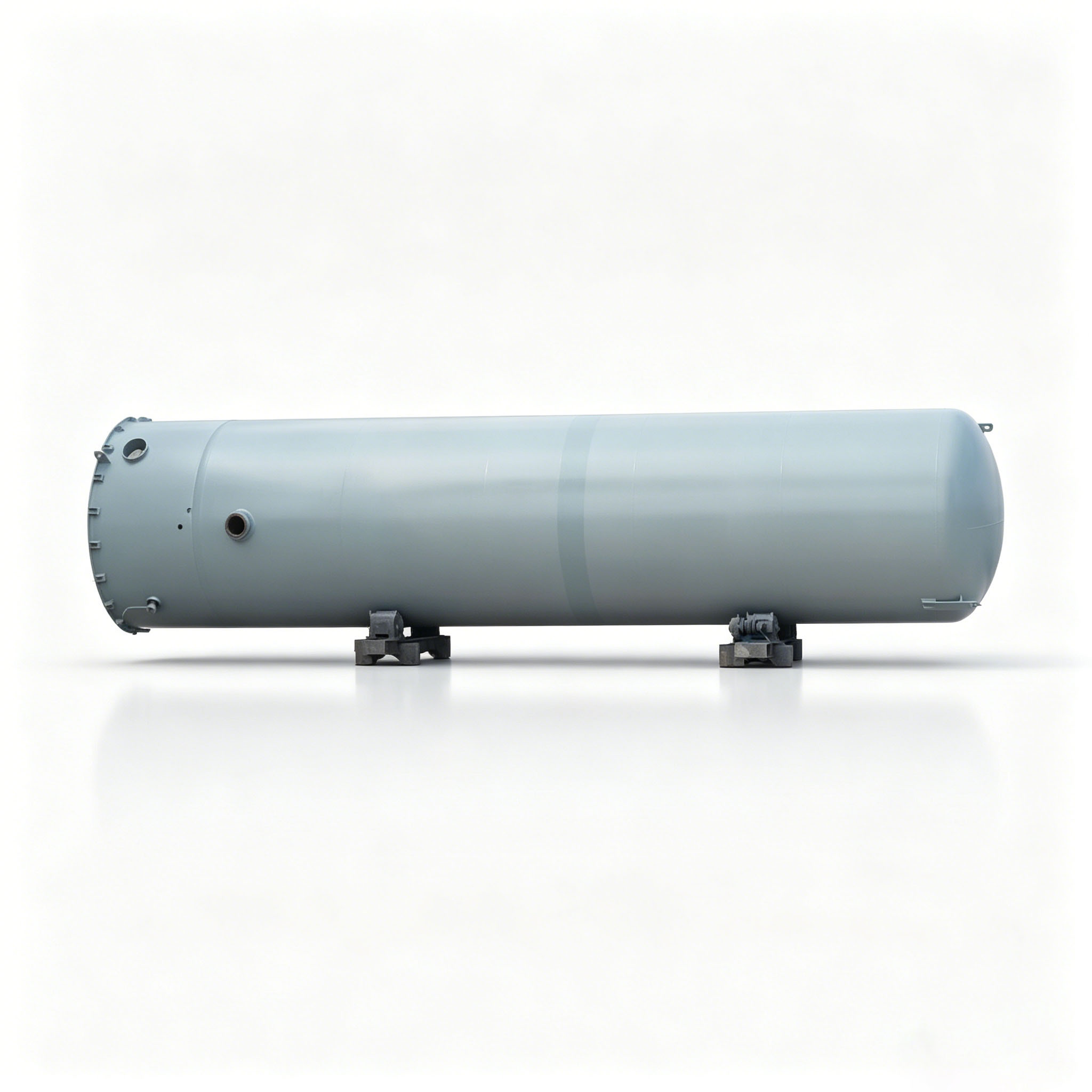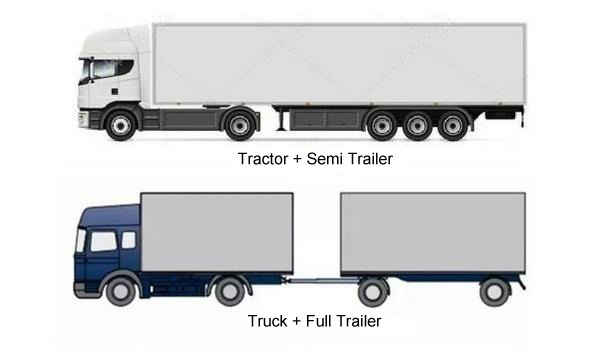
The global trailer industry is dominated by three main categories: semi-trailers, full-trailers (drawbar trailers), and centre-axle trailers. They are differentiated primarily by weight distribution, coupling configuration, and axle layout. Local regulations, road networks, and freight models directly dictate the market share of each type across different regions.
1. Standard Definitions (Based on GB and International Standards)

1. Semi-Trailers (The Global Industry Standard)
- Definition: The trailer’s center of gravity is located ahead of its axles, meaning it has no front axle. Its front end rests on the towing vehicle’s fifth-wheel coupling via a kingpin, allowing the tractor to support 20% to 30% of the total weight. The remaining weight is carried by the trailer’s own rear axles. When uncoupled, it requires landing gear to remain upright.
- International Terms: Articulated lorry (Europe), Semi-truck / Semi-trailer (North America).
- Key Structure: No independent front steering axle, fifth-wheel articulation, air/drum brakes, and landing gear.

2. Full-Trailers (Drawbar Trailers)
- Definition: Equipped with independent front and rear axles, the full-trailer carries 100% of its own structural and cargo weight. It connects to the towing vehicle via a drawbar and hitch. This coupling mechanism transfers towing force only, bearing zero vertical load. It can stand independently on its four wheels and be pushed short distances without a tractor.
- Key Structure: Self-steering front axle, articulated drawbar, and a fully independent chassis.

3. Centre-Axle Trailers (A Specialized Sub-Category)
- Definition: The axles are clustered in the middle of the trailer body, near its center of gravity. It transfers a minimal vertical load (≤10% or≤ 1 tonne) to the towing vehicle. It lacks a front steering axle or separate front/rear axle layouts. It must use landing gear when uncoupled, and it connects via a rigid drawbar without a large steering turntable.
- Typical Applications: Car carriers, express courier box trailers, and travel trailers/caravans.
2. Core Comparison of the Three Trailer Types
| Comparison Dimension | Semi-Trailer | Full-Trailer (Drawbar) | Centre-Axle Trailer |
| Weight Distribution | Tractor bears 20%–30% of the load. | Trailer carries 100% of its own weight. | Tractor bears a light load (≤10%). |
| Coupling Mechanism | Fifth-wheel coupling + kingpin. | Drawbar + turntable hitch. | Short rigid drawbar; no turntable. |
| Independent Parking | Requires landing gear; cannot stand alone. | Self-supporting on wheels; easy to move manually. | Requires landing gear; cannot stand alone. |
| Towing Vehicle | Requires a dedicated semi-tractor. | Can be towed by rigid trucks, light trucks, or pickups. | Towed by medium trucks or tractors; adaptable to light trucks. |
| Turning Radius | Medium. Forward coupling point offers high-speed stability. | Very large; prone to severe rear-end tail-swing. | Smallest radius with minimal tail-swing; highly urban-friendly. |
| Reversing Difficulty | High. Requires counter-steering. | Extreme. Prone to jackknifing; hardest to operate. | Easiest to reverse. Follows the towing vehicle smoothly. |
| High-Speed Stability | Best. Excellent vehicle cohesion. | Poor. Prone to swaying and jackknifing during braking. | Moderate. Centered gravity prevents rollovers. |
| Legal Access (China) | Unrestricted on highways and national roads. | Banned on highways. | Compliant models (car carriers/couriers) allowed on highways. |
| Volume / Payload | 30–55 tonnes; standard 13-meter box. | 40–80 tonnes per unit; supports multi-trailer road trains. | Primarily lightweight; 20–35 tonnes with flexible lengths. |
3. Detailed Pros and Cons
(I) Semi-Trailers: The Backbone of Long-Haul Logistics
Pros
- Top-Tier Driving Stability: Distributing the load to the tractor ensures excellent straight-line stability at high speeds and during wet-weather braking. It has a significantly lower accident rate than full-trailers.
- High Drop-and-Hook Efficiency: One tractor can rotate between multiple trailers. This allows for 24-hour non-stop loading and unloading at ports and warehouses, cutting logistics costs by 30% to 40%.
- Universal Versatility: Available in flatbed, stake, box, refrigerated, tanker, container, and low-boy configurations to suit all cargo types.
- Global Regulatory Compliance: Aligns with standard specifications across major highway networks in China, the US, and Europe, eliminating the need for cross-border modifications.
Cons
- High Capital Investment: It relies heavily on dedicated semi-tractors, meaning standard rigid trucks cannot tow them.
- Steep Learning Curve: Reversing is notoriously difficult for beginners, increasing the risk of minor accidents.
- Limited Maneuverability: Standard 13-meter models require extensive space to turn, making narrow rural roads challenging.
(II) Full-Trailers: Limited to Short-Haul, Yards, and Resource-Rich Regions
Pros
- High Towing Versatility: Can be pulled by 4*2 or 6*4 rigid trucks, light trucks, or pickups, eliminating the need for specialized tractors.
- Autonomous Operation: Can be unhitched and moved independently within yards, offering flexible scheduling for factories, mines, and construction sites.
- Massive Capacity Potential: In regions like Australia or Central Asia, 2 to 3 units can be linked into road trains, pushing total gross weight up to 125 tonnes.
Cons
- Fatal Flaws at High Speeds: Prone to violent swaying and jackknifing during sudden braking or lane changes. Consequently, most countries ban them from highways.
- Extreme Handling Difficulty: A large turning radius and severe tail-swing make full-trailers highly unsuited for urban roads.
- High Maintenance Costs: The additional front steering axle and drawbar turntable double the wear and tear on tires and brakes.
(III) Centre-Axle Trailers: The Choice for Urban, Car-Carrying, and Lightweight Niches
Pros
- Maximum Steering Agility: Its turning radius is roughly 30% smaller than a semi-trailer’s, allowing it to navigate tight city streets and rural lanes with ease.
- High Legal Volume: Lightweight design and even axle distribution maximize cargo space. In China, a compliant centre-axle car carrier can transport up to 9 sedans, compared to just 7 on a standard semi-trailer.
- Excellent Tracking: It follows the towing vehicle perfectly, makes reversing simple, and experiences virtually no tail-swing.
- Eco-Friendly Efficiency: Long Euro-combi setups (up to 25.25 meters) boost cargo capacity by 20% and cut carbon emissions by 11% to 15%.
Cons
- Weak Heavy-Load Performance: Unsuitable for ultra-heavy freight like iron ore or steel coils.
- Higher Purchase and Maintenance Costs: Initial costs are higher than standard semi-trailers, and the smaller market share means fewer specialized service stations.
- Tipping Risks: The centralized gravity creates a risk of forward tipping on steep inclines when fully loaded, requiring strict weight management.
4. Regional Application Profiles and Regulations
1. Mainland China
- Dominant Type: Semi-trailers (over 90% of road freight). They are the only legally approved trailers for highway transport, dominating long-haul, cold-chain, and hazardous chemical transport.
- Full-Trailers: Restricted to short-distance shunting in construction sites, mines, and ports. They are strictly banned from highways.
- Centre-Axle Trailers: Limited to specialized niches, such as car carriers and express courier fleets.
- Regulations (GB1589): Semi-trailers are limited to 13 meters; centre-axle combinations can reach 22 meters.
2. European Union
- Dominant Type: Semi-trailers and Centre-Axle Euro-combis.
- Applications: Standard semi-trailers (16.5m, 44t) handle cross-border transport. Meanwhile, the 25.25-meter, 60-tonne centre-axle “Euro-combi” is legal in Sweden, Finland, Spain, and the Netherlands for high-volume, lightweight cargo.
- Traditional Full-Trailers: Rarely seen on highways; mostly confined to farming and forestry.
- Market Context: With many regional routes under 500 km, the agility of centre-axle trailers shines across Europe’s narrow, historic road networks.
3. North America (US & Canada)
- Dominant Type: Long-wheelbase Semi-trailers (53-foot box trailers).
- Applications: 53-foot semi-trailers dominate interstate logistics. In Canada and the western US, “B-double” setups (two semi-trailers in series) are legal on highways, reaching gross weights of 62.5 tonnes.
- Full/Centre-Axle Trailers: Virtually non-existent in mainline freight, save for small utility trailers on farms.
- Market Context: Straight, expansive interstate highways prioritize high-speed stability over urban maneuverability.
4. Australia
- Dominant Type: Semi-trailers, B-doubles, and Multi-Trailer Road Trains.
- Applications: Standard semi-trailers and B-doubles dominate the populated eastern coast. In the remote outback and mining regions, massive road trains consisting of 3 to 4 full-trailers can span over 50 meters and weigh up to 125 tonnes.
- Market Context: Sparse populations and vast distances mean regulations are relaxed to maximize single-trip payloads.
5. Southeast Asia & Other Developing Regions
- Southeast Asia: Standard 12-meter semi-trailers handle port logistics, while lightweight full-trailers remain popular for rural agricultural transport where national roads permit them.
- Central Asia: A blend of European standards. High-volume Euro-combis handle overland rail-to-road freight, while heavy-duty full-trailers serve mining sectors.
- Africa & South America: Semi-trailers dominate long-haul corridors. Low-cost full-trailers are widely used in agricultural and mining sectors due to loose enforcement of highway bans.
5. Selection Guide: Quick Matching by Business Scenario
- Interstate Long-Haul, Cross-Border Freight, and High-Speed Logistics → Choose Semi-Trailers (Globally standardized, highly stable, and optimized for drop-and-hook).
- Urban Distribution, Car Carrying, and High-Volume Light Freight → Choose Centre-Axle Trailers (Tight turning radius and maximum legal cargo volume).
- In-Yard Shunting, Mining, Construction Sites, or Utilizing Existing Rigid Trucks→ Choose Full-Trailers (Self-supporting, highly rugged, and independent of dedicated tractors).
- Remote, Long-Distance Resource Transport (e.g., Australian Outback) → Choose Multi-Trailer Road Trains.
- High-Volume Intercity Light Freight (European Style) → Choose 25-meter Centre-Axle Euro-combis.