Market Analysis (2021–2026) and Outlook (2026–2029)
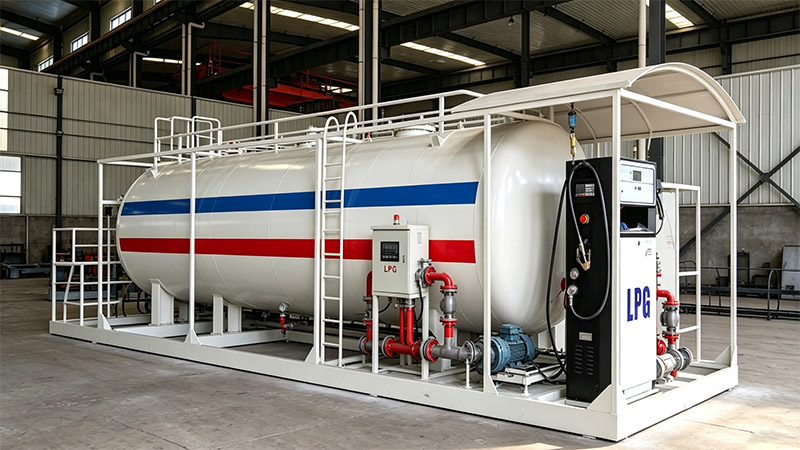
Skid-mounted stations have emerged as crucial infrastructure in the global energy transition. By integrating mechanical components, storage tanks, and digital controls onto a pre-assembled, portable steel framework, these systems bypass the steep capital requirements and lengthy deployment schedules of traditional brick-and-mortar facilities.
1. Retrospective Analysis: Steady Expansion and Scene Deepening (2021–2026)
Over the past five years, the global skid-mounted station market shifted from specialized niche equipment to mainstream institutional adoption. Because the sector comprises diverse sub-categories, market expansion occurred across distinct verticals rather than as a uniform wave.
Market volume expanded significantly. By 2023, the global market for explosion-proof skid-mounted station climbed to $4.26 billion. Concurrently, the total market scale for mobile containerized fueling stations reached $2.74 billion by 2025. This capitalization indicates that modular fueling units are no longer merely temporary fixes, but permanent operational assets for transport networks and industrial hubs.
Growth was heavily driven by terminal demand. Industrial sectors utilized skid-mounted units to cut costs and boost efficiency. In downstream transportation—such as logistics parks, commercial ports, and heavy-duty fleets—these stations solved the logistical problem of on-site fueling. In upstream oil and gas fields, integrated chemical injection skids became standard, saving space and accelerating commissioning schedules.
Technological priorities also shifted during this period. The industry moved away from simple hardware manufacturing toward integrated compliance services and smart automation. Leading providers invested in internet-of-things (IoT) connectivity, automated billing, and secure dual-wall containment systems to build high regulatory barriers to entry.
2. Forward Projections: Diversified Convergence and Accelerated Growth (2026–2029)
The next three years will see accelerated growth marked by technical integration and rapid market entry into developing economies. The compound annual growth rate (CAGR) across traditional sub-sectors is projected to stabilize between 3.5% and 8.9%. Meanwhile, the aggregate mobile containerized energy market is expected to grow from $3.07 billion in 2026 to $6.84 billion by 2032, maintaining a strong CAGR of 13.94%.
Three main trends will shape this period:
- Integrated Energy Nodes: Stations are transforming from single-commodity pumps into multi-energy hubs. Future skids will combine traditional petroleum, liquefied natural gas (LNG), battery charging, and hydrogen dispensing onto a single footprint.
- Advanced Automation: Relying on IoT, edge computing, and cloud SaaS platforms, systems will offer unmanned operations, predictive maintenance, and automated supply chains. Real-time telemetry will track tank levels and prevent fuel theft without on-site staff.
- Cross-Border Technology Transfer: Leveraged by manufacturing scale and established supply chains, Chinese equipment exporters are accelerating shipments to developing regions. This export surge provides high-specification, cost-competitive hardware to international buyers.
3. Cross-Regional Dynamics: Fragmented Rhythms and Strategic Focus
Regional markets show distinct characteristics based on local regulations, environmental mandates, and industrial structures.
| Region | Current Market Position & Share | Strategic Growth Driver (2026–2029) | Primary Product Type |
| Asia-Pacific | Global growth engine. Holds 48% of hydrogen skids; China represents 32% of explosion-proof fueling systems. | Rapid expansion of logistics networks and hydrogen industrial corridors. India and ASEAN are key emerging areas. | Smart multi-energy fueling nodes & hydrogen dispensing skids. |
| North America | Largest market for traditional oilfield skids, holding a projected 35% share through 2035. | Fleet card integration and strict compliance with EPA regulations. Hydrogen potential supported by new tax credits. | High-specification chemical injection & heavy-duty fleet skids. |
| Europe | Regulated, policy-driven market focused on aggressive decarbonization. | Expansion of localized green hydrogen production and “pay-per-blend” service models. | Hydrogen, AdBlue, and advanced biofuel dispensing skids. |
| Middle East & Africa | Infrastructure-constrained market with highly distributed demand. | Remote mining operations, off-grid oil exploration, and infrastructure projects requiring self-contained utilities. | Off-grid, solar-integrated heavy containerized diesel skids. |
In the hydrogen sector, the Asia-Pacific region leads global deployment, accounting for nearly half (48%) of the world market. China drove this segment by adding over 4,800 skid-mounted hydrogen refueling units globally in 2025 alone, with more than 2,100 units deployed domestically. This domestic baseline establishes a clear cost advantage for international trade.
Conversely, Western markets operate under different commercial pressures. North America remains a dominant force in upstream oilfield skids, but its hydrogen deployment has been vulnerable to shifting regulatory priorities. In Europe, growth is driven by strict environmental policies. The region leads in business model innovation, pioneering integrated “green hydrogen production + immediate dispensing” systems and flexible operational leasing models.
4. Strategic Conclusion
The skid-mounted sector is moving from isolated fueling points toward smart, integrated energy nodes. For equipment manufacturers and infrastructure developers, navigating this market requires balancing immediate regional needs against long-term energy shifts. Standardized, rugged diesel systems will continue to drive steady revenue in the Middle East, Africa, and parts of ASEAN. At the same time, high-specification, multi-fuel hydrogen and LNG platforms will define the high-margin sectors in Europe, North America, and coastal China.